Photo Martial arts club photography, disciplined stances, dojo background

Capturing the Spirit: Athletics Club Portraits

We embark on a journey today to explore the multifaceted world of athletics club portraits. These are not merely photographs; they are carefully constructed windows into the soul of a community, a visual repository of dedication, discipline, and collective aspiration. Like archaeologists unearthing ancient civilizations, we delve into the strata of these images, seeking to understand the narratives they present and the historical context they encapsulate. Our aim is to provide a comprehensive analysis of this photographic genre, dissecting its methodologies, its impact, and its evolving role in the digital age.

The Genesis of a Visual Identity

Every athletics club, regardless of its size or discipline, possesses an innate desire to forge a distinct identity. This identity, a tapestry woven from shared experiences, triumphs, and even setbacks, finds one of its most potent expressions in the club portrait. We see it as the visible signature of the collective, a declaration of presence and purpose.

Early Formulations: From Formal to Functional

Historically, early athletics club portraits often mirrored the formal photographic conventions of their era. Stiff poses, meticulous arrangement, and a focus on hierarchical structure were commonplace. These were documents, primarily, designed to record membership and perhaps to adorn the walls of a clubhouse. The camera, a relatively new marvel, was treated with reverence, and the resulting images reflected this formality. Think of the 19th-century team photographs: individuals standing in rigid lines, often with stern expressions, their athletic prowess hinted at rather than overtly displayed. Our understanding of these early examples suggests a dual function:

  • Documentation: A record of who comprised the club at a given time.
  • Legitimation: A visual affirmation of the club’s existence and its members’ commitment.

The Rise of Candidness: A Glimpse Behind the Persona

As photographic technology advanced and aesthetic preferences shifted, a more candid approach began to emerge. The static group shot, while enduring, started to make way for images that captured movement, interaction, and the raw emotion inherent in athletic endeavor. This evolution was not a sudden paradigm shift but a gradual unfolding, mirroring broader societal changes in how we perceive and represent ourselves. We observe this transition in the inclusion of:

  • Action Shots: Moments of competition, training, or celebration.
  • Informal Groupings: More relaxed arrangements reflecting camaraderie.
  • Individual Profiles: Focusing on the unique attributes of individual athletes.

Methodologies and Techniques: Crafting the Image

The creation of an effective athletics club portrait is a careful balancing act, requiring both technical proficiency and an understanding of the club’s ethos. We consider the photographer as a visual storyteller, entrusted with the task of translating an abstract concept – the “spirit” of the club – into a tangible, resonant image.

Lighting and Composition: Orchestrating the Visual Narrative

Lighting, the very brushstroke of photography, plays a pivotal role in shaping the mood and message of a club portrait. We understand that natural light, when harnessed effectively, can imbue an image with an authenticity that artificial light often struggles to replicate. However, studio lighting offers unparalleled control, allowing for a precise articulation of form and texture. Similarly, composition is the architectural blueprint of the photograph. Our analysis reveals common compositional strategies:

  • The Pyramid Formation: A classic, stable arrangement often conveying strength and unity.
  • The Diagonal Line: Introducing dynamism and a sense of forward momentum.
  • The Rule of Thirds: Guiding the viewer’s eye and creating visual balance.
  • Framing: Using natural or artificial elements to draw attention to the subjects.

Posing and Expression: More Than Just a Smile

The direction of subjects, while seemingly trivial, is paramount. We acknowledge the fine line between natural spontaneity and choreographed artificiality. A successful portrait captures genuine interaction and emotion, rather than a forced grimace. This requires rapport between the photographer and the athletes, an understanding of their individual personalities and the collective dynamic. The expressions we seek are those that convey:

  • Determination: The unwavering focus of an athlete.
  • Joy: The euphoria of achievement or shared experience.
  • Comradeship: The unspoken bond between teammates.
  • Vulnerability: The moments of struggle and perseverance.

The Role of Context: Beyond the Frame

A photograph, like a single word, gains its full meaning when placed within a broader context. For athletics club portraits, this context extends far beyond the edges of the frame, encompassing the club’s history, its values, and its future aspirations.

Symbolism and Iconography: Speaking Without Words

Every visual element within an athletics club portrait can be a silent messenger. We meticulously examine the presence and placement of:

  • Club Attire: Uniforms, signifying affiliation and collective identity.
  • Equipment: Tools of the trade, subtly hinting at the discipline.
  • Club Pennants or Banners: Overt declarations of allegiance.
  • Trophies and Awards: Emblems of past successes and future ambitions.

These symbols are not mere decorative elements; they function as a visual lexicon, communicating the club’s narrative to both its members and the wider community. We understand their power to evoke pride, inspire new recruits, and reinforce a sense of belonging.

The Landscape of Achievement: Venues as Backdrops

The chosen location for a club portrait is rarely arbitrary. We recognize that the environment itself can be a powerful contributor to the narrative. From the weathered track to the gleaming gymnasium, each backdrop tells a story:

  • The Training Ground: A testament to hard work and dedication.
  • The Competition Arena: A symbol of challenges met and victories celebrated.
  • The Clubhouse: A sanctuary, representing community and solidarity.

The choice of venue can amplify the message of the portrait, anchoring the athletes within their specific athletic ecosystem and providing a sense of place.

Impact and Legacy: A Lasting Impression

The photographs we create transcend their immediate purpose, blossoming into lasting testaments to a shared journey. We view them as more than just mementos; they are vital components of a club’s historical record and a powerful tool for community engagement.

Archival Significance: Preserving the Past

In an increasingly ephemeral digital landscape, the physical and digital archives of athletics club portraits serve as invaluable historical documents. We recognize their role in:

  • Chronicling Evolution: Demonstrating changes in membership, uniforms, and even athletic disciplines over time.
  • Honoring Predecessors: Connecting current members with the legacy of those who came before them.
  • Documenting Milestones: Commemorating significant club achievements and anniversaries.

These archives are a tangible link between generations, a visual thread weaving through the club’s narrative from its inception to the present day.

Recruitment and Community Engagement: A Visual Welcome Mat

For prospective members, a compelling club portrait can be the first, and often most impactful, introduction to a club’s culture. We observe that these images effectively function as:

  • Brand Ambassadors: Visually communicating the club’s spirit and values.
  • Inspiration: Showcasing the achievements and camaraderie that potential members can aspire to.
  • Invitations: A warm, visual welcome, encouraging engagement.

In essence, these portraits act as a visual narrative, an enticing glimpse into the vibrant community that awaits them. They are a silent invitation to participate, to contribute, and to belong.

The Digital Age: New Avenues, Enduring Principles

The advent of digital photography and the proliferation of online platforms have irrevocably altered the landscape of club portraiture. While the fundamental principles of good photography remain immutable, the avenues for creation, dissemination, and interaction have expanded exponentially.

Social Media and Online Presence: Beyond the Photo Album

No longer confined to dusty albums or clubhouse walls, athletics club portraits now find a global audience through social media and club websites. We understand this shift as both an opportunity and a challenge:

  • Increased Reach: Broader dissemination to a wider audience.
  • Real-Time Engagement: Immediate feedback and interaction with the images.
  • Dynamic Storytelling: The ability to present portraits as part of a larger ongoing narrative.

This digital ubiquity necessitates a consideration of consistency in visual branding and a strategic approach to content curation. We also acknowledge the ethical considerations regarding image rights and privacy in this interconnected world.

The Evolving Aesthetic: From Formal to Fluid

The digital medium has fostered a more fluid and experimental approach to club portraiture. We see a departure from rigid formality towards images that are often more spontaneous, less posed, and imbued with a sense of journalistic immediacy. This evolution is characterized by:

  • User-Generated Content: Members contributing their own images.
  • Short-Form Video: Integrating motion and sound to enhance the visual narrative.
  • Interactive Elements: Encouraging viewers to engage directly with the content.

While traditional portraiture retains its value, the digital age demands a broader visual language, one that embraces dynamism and interactivity without sacrificing authenticity or impact. We believe that regardless of the medium, the ultimate goal remains the same: to capture and convey the indelible spirit of the athletics club. Our continuous exploration of this genre reaffirms its enduring significance, a visual testament to human perseverance, ambition, and the profound power of collective endeavor.

Contact Us

FAQs

What are athletics club portraits?

Athletics club portraits are professional photographs featuring members of an athletics club, often showcasing individual athletes or the entire team in their sports attire.

Why are athletics club portraits important?

These portraits help promote the club, build team spirit, and provide athletes with personal keepsakes. They can also be used for marketing, social media, and event programs.

When is the best time to take athletics club portraits?

The best time is usually at the beginning of the season or during a special team event, ensuring all members are present and in peak condition.

What should athletes wear for club portraits?

Athletes typically wear their official club uniforms or training gear to maintain a consistent and professional appearance in the portraits.

Can athletics club portraits include action shots?

Yes, many clubs incorporate action shots alongside traditional posed portraits to capture the dynamic nature of the sport and highlight individual athletic skills.

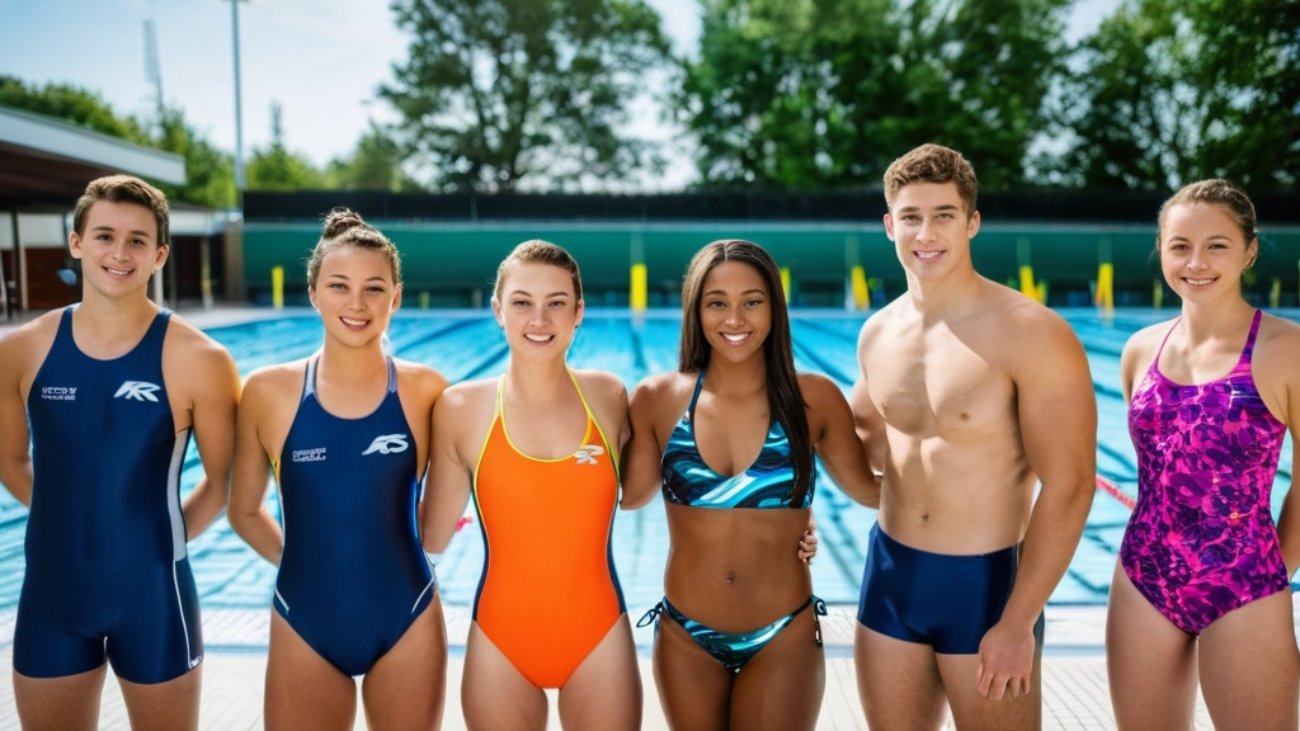
Photo Gymnastics team portrait, flexible poses, studio backdrop, dynamic feel

Capturing the Action: Hockey Team Photography

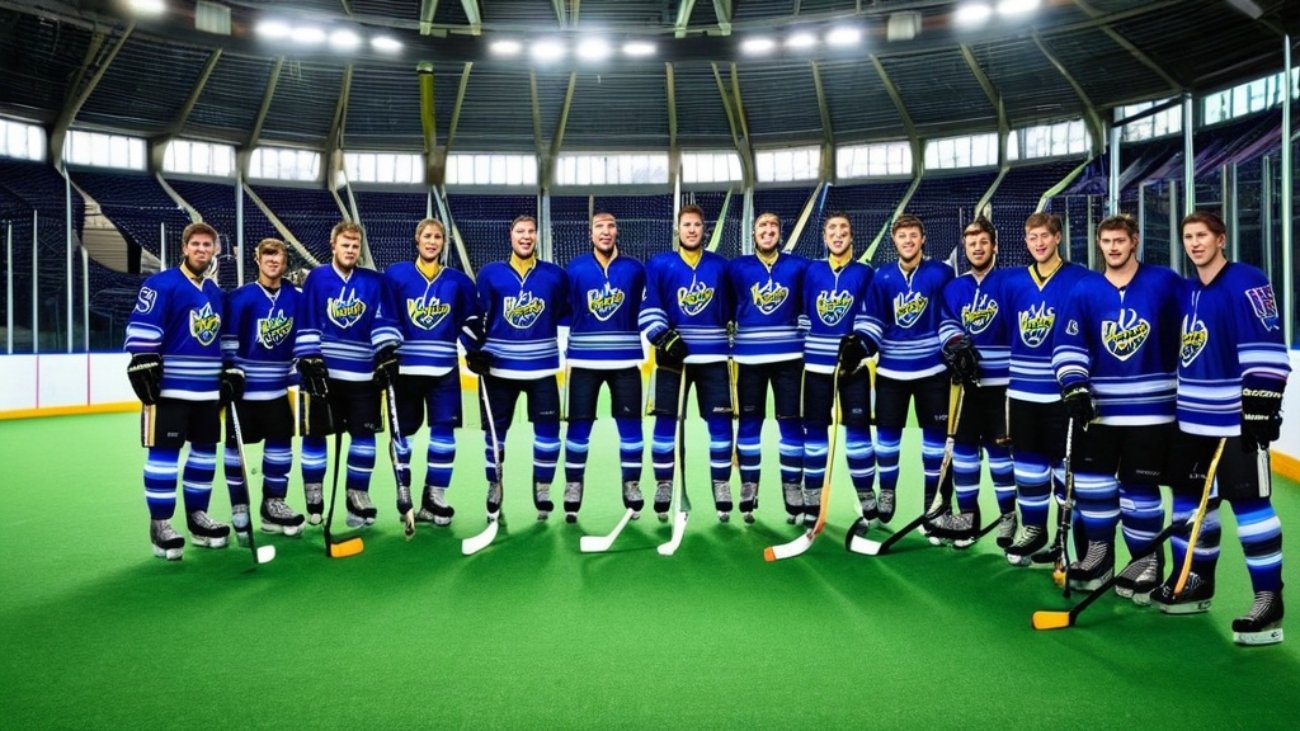
This article explores the multifaceted discipline of hockey team photography, a specialized field within sports photography that deviates from general portraiture and panoramic landscapes. We, as practitioners and observers, delve into the techniques, equipment, and considerations necessary for effectively documenting the dynamic environment of a hockey game and the static moments of a team’s unity.

Hockey, with its rapid pace, intricate plays, and often brutal physicality, presents a unique set of challenges and opportunities for photographers. We are tasked not merely with capturing an image, but with freezing moments of intense athleticism, strategy, and emotion.

Speed and Precision: A Constant Battle

The puck, a small black disk traveling at speeds exceeding 100 miles per hour, is often our primary subject. Capturing it in focus, along with the player executing the shot or pass, requires an unparalleled combination of shutter speed, aperture, and precise timing. We understand that a fraction of a second can differentiate a compelling narrative from a blurred obscurity. Our camera settings are often a delicate dance around the limitations of light within an arena.

Lighting: The Photographer’s Foe and Friend

Arena lighting, while generally consistent, can be surprisingly challenging. It is often a mix of overhead fluorescents and powerful spotlights, creating harsh contrasts, deep shadows, and color temperature inconsistencies. We must learn to navigate these conditions, utilizing white balance adjustments and post-processing techniques to render accurate and aesthetically pleasing images. Sometimes, the dramatic interplay of light and shadow, such as a spotlight highlighting a player against a darkened background, can be leveraged to create a more artistic and impactful image.

Glass and Netting: Obstacles and Opportunities

The protective glass surrounding the rink, and the netting behind the goals, present significant physical barriers. We often find ourselves shooting through layers of transparent but reflective material, battling glare, reflections, and distortions. Positioning is paramount; we aim to minimize these obstructions while still maintaining optimal angles of play. Occasionally, the blur of the net or the reflections on the glass can add a unique stylistic element, emphasizing the separation between the spectator’s world and the intensity of the game.

Hockey team photography captures the essence of teamwork and athleticism, showcasing players in action and the camaraderie that defines the sport. For those interested in exploring more about sports photography, including techniques and tips for capturing dynamic moments, you can check out a related article on running event sports photography at this link. This resource provides valuable insights that can be applied to various sports, including hockey, enhancing your ability to document thrilling moments on the ice.

Essential Equipment for Hockey Photography

Our toolkit for hockey photography is specialized, reflecting the demanding nature of the sport. We invest in equipment that prioritizes speed, light-gathering capabilities, and durability.

Camera Bodies: Built for Speed and Resilience

High-end DSLR or mirrorless camera bodies are our preferred tools. We prioritize models with fast continuous shooting rates (typically 10 frames per second or higher), robust autofocus systems that can track rapidly moving subjects, and excellent low-light performance. Features like a large buffer size are invaluable, allowing us to capture extended bursts of action without the camera “choking.” We acknowledge that these cameras represent a significant investment, but their performance directly correlates with our ability to capture crucial moments.

Lenses: The Eyes of the Photographer

Our lens selection is perhaps the most critical aspect of our gear. We generally favor fast telephoto lenses, which allow us to maintain a safe distance from the action while still filling the frame with our subjects. Lenses with a wide maximum aperture (f/2.8 or f/4) are essential for gathering as much light as possible in dimly lit arenas and for creating a pleasing depth of field that isolates the subject.

Prime Lenses vs. Zoom Lenses

While zoom lenses offer versatility in framing, we often gravitate towards prime lenses for their superior sharpness and wider apertures. A 70-200mm f/2.8 zoom is a workhorse for us, covering a broad range of mid-ice action. However, for tight shots of player expressions or puck battles in the corners, a 300mm f/2.8 or even a 400mm f/2.8 prime lens becomes indispensable. The choice often depends on our access to the rink and the specific type of shots we aim to achieve.

Wide-Angle Perspectives

Occasionally, we will employ wide-angle lenses, such as a 24-70mm f/2.8, to capture the broader context of the arena – the crowd, the bench, or the celebration of a goal. These shots provide a valuable contrast to the tight action shots, adding another layer to our visual narrative of the game.

Monopods and Tripods: Stability in Motion

Given the weight of our telephoto lenses, monopods are almost always used. They provide crucial support, reducing camera shake and allowing us to maintain steady framing during prolonged periods of shooting. While tripods are less common during a game, they can be useful for capturing time-lapses or for remote camera setups in specific locations.

Techniques for Capturing the Action

Beyond the equipment, our success hinges on our understanding and application of specific photographic techniques tailored to the rapid, unpredictable nature of hockey. We are not merely aiming and clicking; we are anticipating, reacting, and composing in real-time.

Anticipation: The Photographer’s Sixth Sense

Hockey is a game of flow and anticipation. We learn to predict player movements, understand common plays, and recognize the tell-tale signs of an impending shot, pass, or hit. This foresight allows us to pre-focus, adjust our framing, and be ready to trigger the shutter at the crucial moment. It’s akin to a chess player anticipating several moves ahead, but at a much faster pace.

Autofocus Prowess: Tracking the Target

Our camera’s autofocus system is a vital ally. We rely heavily on continuous autofocus modes (AI Servo on Canon, AF-C on Nikon and Sony), often coupled with advanced tracking technologies that allow the camera to lock onto a player and follow them across the ice. We experiment with different autofocus area modes – expanding our focus points for wide-ranging action or narrowing them for precise target acquisition – to find what works best in various scenarios.

Shutter Speed: Freezing the Fleeting Moment

To arrest the motion of players and the puck, we generally employ very fast shutter speeds. For most action, we start at 1/1000th of a second and increase it as needed, often reaching 1/2000th or even 1/4000th for incredibly fast subjects like slap shots. The goal is to render sharp, detailed images where every drop of ice spray and every ripple of the jersey is perfectly defined.

Aperture and Depth of Field: Isolating the Star

We typically shoot with wide apertures (f/2.8 to f/4) to maximize light gathering and to create a shallow depth of field. This technique helps to isolate our subject from the background, drawing the viewer’s eye directly to the player in action. A blurry background, or bokeh, can also visually declutter the frame, making the image more impactful.

Storytelling Through Images: Beyond the Action

While capturing peak action is fundamental, we understand that a comprehensive photographic narrative of a hockey team extends beyond goals and saves. We strive to capture the human element, the emotions, and the overall atmosphere that defines the sport.

Capturing Emotion: The Heart of the Game

Hockey is an emotionally charged sport. We aim to capture the raw expressions: the exhilaration of a goal, the frustration of a missed opportunity, the intensity of a face-off, or the pain of a hard hit. These moments, often fleeting, are powerful in conveying the story of the game and the dedication of the athletes. We often focus on the faces, recognizing that the eyes and mouth are windows to the soul of the player.

Team Dynamics: Unity in Diversity

Beyond individual players, we also seek to document the collective identity of the team. This includes shots of players on the bench, communicating during stoppages, celebrating goals together, or even the subtle interactions that reveal their camaraderie. We understand that a team is more than the sum of its individual parts, and our photography aims to reflect this unified spirit.

Pre-Game and Post-Game Rituals

The moments before and after a game offer unique opportunities for capturing the atmosphere and the human side of the sport. Stretching, strategizing with coaches, nervous anticipation, or the triumphant celebrations and somber reflections after the final whistle all contribute to the overarching narrative. These are often less frenetic moments, allowing us to compose more deliberate and intimate portraits.

The Environment: Setting the Scene

We also pay attention to the broader environment. Shots of the packed stands, the illuminated scoreboard, the ice surface glistening under the lights, or the team logo at center ice, all contribute to setting the scene and conveying the magnitude of the event. These wider shots provide context for the intense action we capture in tighter frames.

For those interested in the captivating world of hockey team photography, you might find the insights in this related article particularly enlightening. It explores various techniques and styles that can enhance the visual storytelling of a team’s journey, capturing not just the action on the ice but also the camaraderie and spirit that define the sport. Whether you’re a budding photographer or a seasoned pro, the tips shared in the article can help elevate your hockey photography to new heights.

Post-Processing and Delivery

Our work does not conclude with the click of the shutter. Post-processing is an integral part of our workflow, allowing us to refine our images and prepare them for delivery.

Image Selection and Culling: The Art of Discarding

After a game, we are often faced with thousands of images. The process of culling, or selecting the best shots, is critical. We look for sharpness, composition, emotional impact, and technical accuracy. We understand that it is better to present a curated selection of exceptional images than an overwhelming volume of mediocre ones. This selective process is both time-consuming and creatively demanding.

Editing and Enhancement: Polishing the Diamonds

Once culled, our chosen images undergo editing. This typically involves adjustments to exposure, white balance, contrast, and sharpening. We aim for a natural yet impactful look, enhancing the visual appeal without making the images appear artificial. Cropping and straightening are also common as we refine the composition. Our goal is to bring out the best in each photograph, ensuring it accurately reflects the moment we captured.

Delivery and Archiving: Preserving the Legacy

Finally, we deliver our images to clients – teams, media outlets, or individual players – in appropriate formats and resolutions. We also maintain a robust archiving system, safeguarding our work for future reference and historical significance. We recognize that these photographs serve as a visual record of a team’s journey and the individual achievements within it, a legacy that we are proud to help create.

In conclusion, hockey team photography is a challenging yet highly rewarding endeavor. It demands specialized equipment, technical proficiency, and a keen eye for anticipating and capturing fleeting moments of speed and emotion. We, as practitioners in this field, continually refine our craft, striving not just to document the game, but to tell its compelling story, one powerful image at a time. The ice, like a canvas, awaits our interpretation, and we stand ready to capture its vibrant, often violent, beauty.

Contact Us

FAQs

What equipment is essential for hockey team photography?

Essential equipment includes a DSLR or mirrorless camera with a fast shutter speed, telephoto lenses (such as 70-200mm), a monopod or tripod for stability, and extra batteries and memory cards. A camera with good low-light performance is also beneficial due to indoor rink lighting.

When is the best time to photograph a hockey team?

The best time to photograph a hockey team is during practice sessions or before and after games when players are more relaxed and available for posed shots. Action shots are best captured during games, focusing on key moments and player interactions.

How can photographers capture clear action shots in hockey?

Photographers should use a fast shutter speed (1/1000 second or faster) to freeze motion, continuous autofocus to track players, and burst mode to capture multiple frames per second. Positioning near the ice level and anticipating player movements also helps in capturing dynamic shots.

What are some tips for posing a hockey team for group photos?

Arrange players in tiers, with taller players or coaches standing at the back and shorter players seated or kneeling in front. Ensure all players are visible, and include hockey sticks and gear for authenticity. Use natural or rink lighting to evenly illuminate faces.

Are there any safety considerations when photographing hockey games?

Yes, photographers should stay behind protective glass or designated areas to avoid pucks and players. Wearing appropriate clothing and using lens hoods can protect equipment from cold and moisture. Always follow rink rules and respect players and officials during the game.

Photo Swimming club portrait, athletes in swimwear, poolside professional lighting

Capturing the Spirit: Basketball Team Portraits

We are about to embark on a journey into the art and practice of capturing the spirit of a basketball team through portraiture. Far more than just a static arrangement of individuals, a team portrait is a visual artifact, a time capsule that encapsulates a season, a roster, and the intangible essence of collective effort. As we delve into this subject, we aim to equip you, the reader, with a comprehensive understanding of what makes a great basketball team portrait and how to achieve it.

The basketball team portrait serves multiple, crucial functions, extending beyond mere identification. It is a cornerstone of team branding, a tool for fundraising, and a vital component of team history. We will examine each of these facets to understand the foundational importance of this visual undertaking.

Documenting Identity and Belonging

At its most basic, a team portrait establishes a visual identity for the current roster. It marks this group of athletes as a distinct unit, a collective that has come together for a shared purpose. This formality imbues a sense of legitimacy and recognition, both for the players themselves and for the wider community – be it fans, alumni, or potential sponsors. The act of standing together, formally posed, reinforces the idea of unity and shared commitment. It’s a declaration to the world: “This is who we are, together.”

Building a Historical Record

Each season, a new team emerges, with unique personalities, evolving dynamics, and its own set of challenges and triumphs. The team portrait serves as a crucial point of reference in the ongoing narrative of a basketball program. These images become historical markers, documenting the evolution of rosters, coaching staff, and the visual identity of the team over time. They are the visual equivalent of chapter headings in the long and storied book of a team’s journey. When future players look back, these portraits will be their windows into the past, connecting them to those who came before.

The Power of Visual Storytelling

Beyond simple documentation, a well-executed team portrait can subtly convey the narrative of a team. The composition, the expressions, the unity of purpose – all these elements contribute to a visual story. It speaks of camaraderie, of shared goals, and the dedication required to achieve them. A powerful portrait can resonate with fans on an emotional level, drawing them closer to the team and fostering a deeper connection. It’s not just a picture; it’s a story waiting to be unfolded with each viewing.

The Marketing and Fundraising Asset

For athletic departments and booster clubs, team portraits are invaluable marketing and fundraising tools. High-quality images are essential for team brochures, websites, social media campaigns, and promotional materials. They lend a professional air to the team, attracting potential sponsors who seek to align themselves with successful and well-presented organizations. Furthermore, signed prints of team portraits are often used as cherished items in fundraising auctions, raising much-needed capital for team operations, equipment, and travel.

Fostering Team Cohesion and Pride

The process of creating a team portrait can, in itself, be a bonding experience. The shared anticipation, the collective effort to look one’s best, and the final product all contribute to a sense of shared accomplishment. Seeing themselves represented as a cohesive unit can foster a deeper sense of pride and belonging among the players, strengthening their commitment to one another and to the team’s goals. It’s akin to a unified front being presented, an unspoken declaration of mutual support.

Basketball team portraits play a crucial role in capturing the spirit and unity of a team, much like the stunning cricket portraits showcased in this related article. These images not only highlight the individual talents of the players but also emphasize the camaraderie and teamwork essential in sports. For a deeper understanding of how photography can enhance the visual representation of athletic teams, you can explore the article on cricket portraits and photography at this link.

Crafting the Scene: Pre-Production and Planning

As with any successful artistic endeavor, thoughtful pre-production is paramount to achieving a compelling basketball team portrait. This phase lays the groundwork for a smooth and efficient shoot, ensuring that all logistical and creative elements are considered before the players even step onto the court or into the studio.

Defining the Aesthetic Vision

Before any camera is touched, a clear aesthetic vision must be established. This involves considering the overall mood and style of the portrait. Is it meant to be formal and stately, or more dynamic and energetic? The desired outcome will inform decisions about location, lighting, and even the pose itself. Think of this as choosing the brushstrokes before you begin painting the masterpiece.

Lighting Styles and Their Impact

The way light interacts with the subjects is perhaps the most critical element in portrait photography. Different lighting styles evoke different emotions and create distinct visual effects.

Dramatic and Moody Lighting

This style often employs strong contrasts between light and shadow, creating a sense of intensity and grandeur. It can be achieved through directional lighting, such as spotlights or natural light filtered through windows, that sculpts the features and emphasizes form. This lighting can lend a powerful, almost heroic feel to the portrait, suggesting the fierce competition and dedication of the athletes.

Soft and Even Lighting

In contrast, soft and even lighting minimizes harsh shadows and creates a more approachable and serene atmosphere. This is often achieved through diffused light sources, like a large softbox or overcast natural light. This style can highlight the camaraderie and team spirit, presenting a unified and friendly front.

High-Key and Low-Key Lighting

High-key lighting involves minimizing shadows and creating a bright, airy feel, often associated with optimism and positive energy. Low-key lighting, conversely, uses deep shadows and limited illumination to create a sense of drama, mystery, or intensity. The choice between these extremes will significantly alter the perceived character of the team.

Location, Location, Location

The backdrop against which the team is photographed plays a vital role in the narrative. The chosen location should be relevant to the team and enhance the overall aesthetic.

The Home Court Advantage

Photographing the team on their home court offers a natural and authentic setting. The familiar environment, the branding visible in the background, and the very essence of where they play all contribute to a powerful sense of place and belonging. This is their domain, and the portrait should reflect that.

Studio Versatility

A studio setting offers greater control over lighting and background elements. This allows for a more curated and often cleaner aesthetic, allowing the players to be the sole focus without the distractions of a busy environment. It provides a blank canvas for creative expression.

Iconic Campus or City Backdrops

For some teams, incorporating iconic campus landmarks or recognizable cityscapes can add a layer of pride and identity. This grounds the team within its broader community, showcasing its roots and affiliations.

Wardrobe and Uniform Coordination

Consistency in wardrobe is crucial for a cohesive team portrait. This typically involves the team’s official uniform, but thoughtful consideration should be given to accessories and any variations.

The Power of the Uniform

The uniform is the most potent visual symbol of team identity. Ensuring that all players are wearing their full, clean, and correctly fitted uniforms is paramount. The design, colors, and logos of the uniform communicate a wealth of information about the team.

Accessory Considerations

While the uniform is central, minor accessory choices can contribute to the overall look. This might include consistent choices for socks, shoes, or even undershirts. The goal is uniformity without monotony.

Hair and Grooming Standards

Encouraging players to maintain a consistent and neat appearance, particularly regarding hair, can significantly enhance the professionalism of the portrait. This is not about erasing individuality but about presenting a unified front.

Directing the Ensemble: Posing and Composition

Once the logistical elements are in place, the focus shifts to the art of posing and composition. This is where the photographer guides the athletes to create a visually impactful and meaningful image.

The Art of the Group Pose

Arranging a group of individuals into a compelling and balanced composition requires skill and foresight. The goal is to avoid a flat, static arrangement and instead create a sense of depth, connection, and dynamism.

Creating Depth and Layers

To avoid a line-up that resembles a shelf of action figures, photographers employ techniques to create depth. This can involve staggering players at different heights, using benches or chairs, and varying the distance of individuals from the camera. This visual layering draws the viewer’s eye through the image.

Emphasizing Unity and Connection

Subtle cues can communicate unity. This might include having players stand shoulder-to-shoulder, placing arms around one another, or having them make eye contact with each other as well as the camera. These small gestures foster a sense of camaraderie.

Dynamic vs. Static Poses

While a static, formal pose has its place, incorporating dynamic elements can inject energy into the portrait. This could involve players in a ready stance, or even subtle movements that suggest action and athleticism. The key is to balance dynamism with the need for a clear and recognizable representation of the team.

The Importance of Eye Contact

The eyes are often considered the windows to the soul, and in a team portrait, they are crucial for establishing a connection with the viewer.

Direct Gaze for Engagement

When players direct their gaze towards the camera, they create a direct line of communication with the viewer. This fosters engagement and makes the portrait feel more immediate and personal. It’s as if they are speaking directly to you, the reader.

Subtle Interactions and Off-Camera Glances

While direct eye contact is important, there can also be value in subtle interactions between players, such as a shared glance or a half-smile. These moments can hint at the internal dynamics and relationships within the team.

Incorporating Team Symbols and Equipment

Authenticity is key, and incorporating elements that are intrinsically linked to the sport elevates the portrait.

The Basketball as a Prop

The basketball itself is an undeniable symbol of the sport. Its presence can be subtle, such as a player holding it, or more integrated into the pose. It serves as a tangible reminder of the team’s purpose.

Uniform Accents and Equipment

Beyond the uniform, other pieces of equipment like basketball shoes or even a strategically placed sideline chair can add further context and authenticity to the image.

Capturing the Essence: Lighting and Technical Execution

The technical aspects of photography – lighting and camera settings – are fundamental to translating the planned vision into a tangible image. Precision in these areas ensures that the spirit of the team is not only captured but also rendered with clarity and impact.

Mastering the Light

As touched upon earlier, light is the paintbrush of photography. Its deliberate manipulation is essential for creating mood, form, and emphasis.

Natural Light as a Foundation

Natural light, when controlled, can provide a beautiful and often more organic feel. Understanding how to use windows, open shade, and time of day is crucial for leveraging this powerful resource.

Artificial Light for Control and Drama

Artificial lighting, such as strobes and continuous lights, offers the photographer unparalleled control over the light’s direction, intensity, and quality. This is where dramatic effects and precise sculpting of features are often achieved.

Key Light, Fill Light, and Backlight

Understanding the roles of key light (the primary source), fill light (to soften shadows), and backlight (to create separation) allows for the deliberate shaping of the scene and the subjects within it.

Camera Settings for Clarity and Impact

The camera settings are the technical levers that determine the exposure, sharpness, and overall look of the photograph.

Aperture for Depth of Field

The aperture setting controls the depth of field, which is the range of distance in front of and behind the point of focus that appears sharp. A wider aperture (smaller f-number) creates a shallow depth of field, blurring the background and isolating the subjects, while a narrower aperture (larger f-number) keeps more of the scene in focus.

Shutter Speed for Motion and Sharpness

Shutter speed determines how long the camera’s sensor is exposed to light. A fast shutter speed freezes motion, ensuring sharp images even with active subjects, while a slower shutter speed can introduce intentional motion blur for creative effect. For a team portrait, sharpness is generally prioritized.

ISO for Sensitivity and Grain

ISO controls the camera sensor’s sensitivity to light. A lower ISO setting produces cleaner images with less digital noise (grain), while a higher ISO allows for shooting in low light conditions but introduces more grain.

Lens Choice: The Photographer’s Eye

The lens chosen significantly impacts the perspective and focal length of the image, influencing how the subjects are presented.

Wide-Angle Lenses for Grandeur

Wide-angle lenses can exaggerate perspective and make the scene appear larger and more encompassing, which can be useful for capturing the entire team and their environment.

Standard Lenses for Natural Perspective

Standard lenses (around 50mm on a full-frame camera) offer a perspective that closely mimics human vision, providing a natural and unwarped view of the subjects.

Telephoto Lenses for Compression and Isolation

Telephoto lenses can flatten perspective and compress distances, allowing for a focus on the team while subtly blurring backgrounds and isolating them from their surroundings.

Basketball team portraits capture the essence of camaraderie and athleticism, showcasing players in a way that highlights their individual personalities while also emphasizing the unity of the team. For those interested in exploring the art of capturing such dynamic images, a related article on photography techniques can provide valuable insights. You can read more about it in this informative piece on photography classes that delve into the skills needed to create stunning sports portraits.

Post-Production: Honing the Vision

The work doesn’t end when the shutter button is released. Post-production is the crucial stage where raw images are refined, corrected, and brought to their full potential, ensuring that the captured spirit is polished and presented effectively.

Color Correction and White Balance

Ensuring accurate and consistent color representation is fundamental. White balance adjustments bring colors to their natural appearance, and color correction can fine-tune hues and saturation to match the desired aesthetic.

Ensuring True Tones

The goal is to represent the colors of the uniforms and the environment accurately, so the viewer sees what the team and their surroundings truly look like.

Enhancing Mood and Atmosphere

Beyond accuracy, color grading can be used to subtly enhance the mood or atmosphere of the portrait, be it vibrant and energetic or more subdued and dramatic.

Retouching for Perfection

Retouching is a delicate art, focused on subtle enhancements rather than artificial alterations. The aim is to clean up minor imperfections without compromising the authenticity of the individuals.

Skin Tone and Blemish Correction

Minor skin tone adjustments and the removal of temporary blemishes, stray hairs, or dust spots can elevate the professionalism of the portrait.

Sharpening and Contrast Adjustments

Careful sharpening can enhance detail and definition, while contrast adjustments can add depth and visual impact.

Cropping and Composition Refinement

Even in the final stages, minor cropping can be used to perfect the composition, eliminate distractions, and draw the viewer’s eye to the most important elements of the image.

Delivering the Final Product

The way the final images are presented is as important as their creation. This involves selecting the best images and delivering them in formats suitable for their intended use.

High-Resolution Files for Print

For physical prints, such as posters or framed portraits, high-resolution files are essential to ensure crisp detail and vibrant colors.

Optimized Files for Digital Use

For online use, such as websites and social media, images need to be optimized for web display, balancing quality with file size for faster loading times.

Beyond the Frame: The Enduring Impact of Team Portraits

The basketball team portrait, when executed with care and intention, transcends its immediate purpose. It becomes a lasting testament to dedication, teamwork, and the shared journey of a group of athletes.

A Source of Nostalgia and Reflection

Years down the line, these portraits will spark memories and fuel conversations. They act as tangible anchors to a specific time in the lives of the athletes and the history of the program. Players will look at these images and remember the challenges they overcame, the friendships they forged, and the collective spirit that defined their season.

A Symbol of Program Strength and Legacy

A consistent collection of strong team portraits over time visually communicates the enduring strength and legacy of a basketball program. It shows a continuous line of athletes who have dedicated themselves to the sport and to the institution, building upon the foundations laid by those who came before.

Inspiring Future Generations

For prospective athletes, a well-curated gallery of team portraits can be a powerful source of inspiration. It offers a glimpse into the caliber of athletes who have been part of the program and the sense of community they can expect to find. It’s a visual promise of the experience awaiting them.

In conclusion, capturing the spirit of a basketball team through portraiture is a multifaceted endeavor that combines artistic vision, technical proficiency, and a deep understanding of the subject matter. By meticulously planning, thoughtfully executing, and artfully refining the final images, we create visual legacies that resonate long after the final buzzer. We, as creators and appreciators of these images, hold a mirror to the dedication, camaraderie, and athletic prowess that define a team.

Contact Us

FAQs

What is the purpose of basketball team portraits?

Basketball team portraits are taken to capture and showcase the members of a basketball team, often used for promotional materials, yearbooks, and memorabilia.

When is the best time to take basketball team portraits?

The best time to take basketball team portraits is typically at the beginning of the season, before games and practices begin, to ensure all players are present and in uniform.

What should players wear for basketball team portraits?

Players should wear their official team uniforms, including jerseys and shorts, and sometimes team warm-ups or jackets, to maintain a consistent and professional appearance.

How are basketball team portraits usually arranged?

Basketball team portraits are usually arranged with players standing or sitting in rows, often with coaches positioned in the center or at the ends, to clearly display all team members.

Can basketball team portraits be used for recruiting purposes?

Yes, basketball team portraits can be used in recruiting materials to highlight the team’s composition, spirit, and professionalism to prospective players and supporters.

Photo Athletics club portraits, runners posed confidently, track setting

Capturing the Essence of Team Unity: Netball Photography

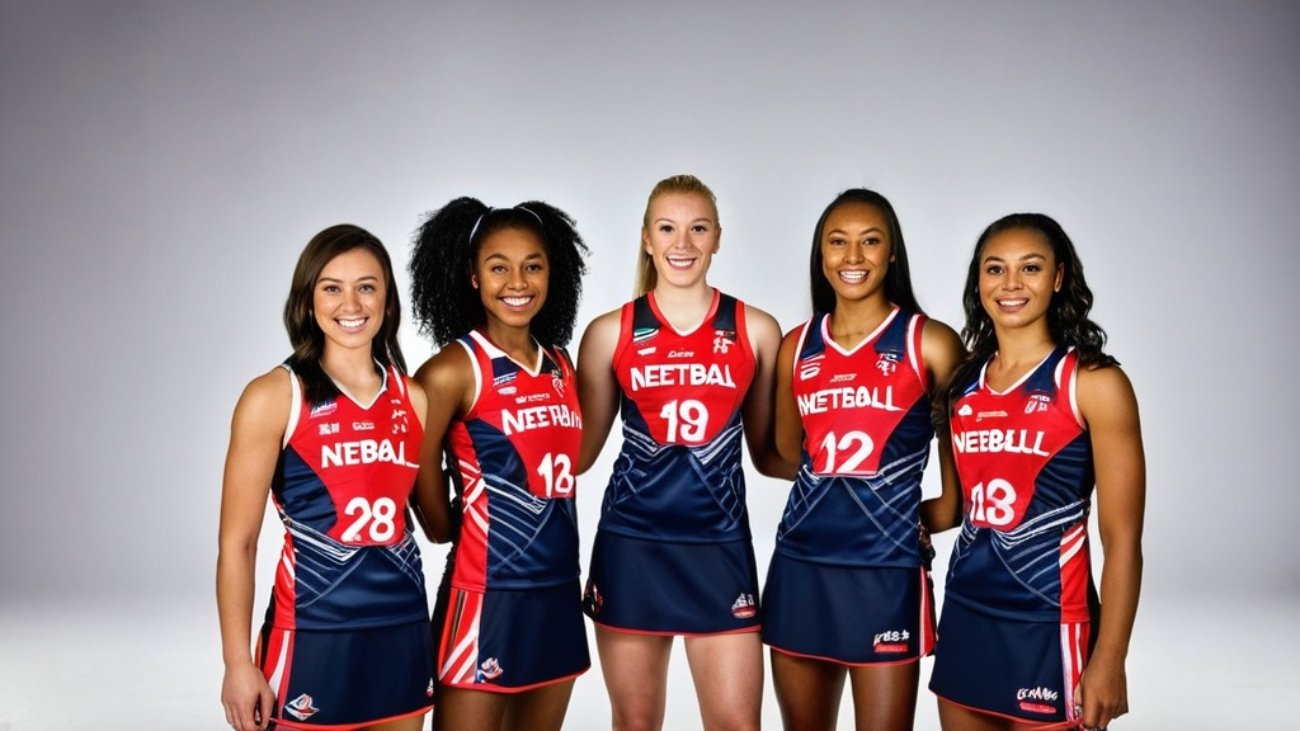
We, as observers and chroniclers of human endeavour, often find ourselves drawn to the complex interplay of individual skill and collective action. In the realm of sport, this dynamic is amplified, and nowhere is it more evident than in netball. Our mission, when approaching netball photography, is not merely to document movement, but to capture the very essence of team unity. We aim to freeze moments that articulate the unspoken language, the shared understanding, and the synergistic power that transforms a group of individuals into a cohesive, unstoppable force. We believe that by understanding the nuances of the game and the psychology of its participants, we can craft images that resonate deeply with both players and spectators, offering a glimpse into the heart of the team.

Before we even consider pressing the shutter, we must first immerse ourselves in the intricacies of netball. It’s a game of rhythm, precision, and relentless motion. We perceive the court not just as a playing surface, but as a dynamic canvas where strategies unfold and emotions collide. Understanding the specific roles of each player, the flow of play, and the subtle cues that indicate an impending pass or shot, are paramount to our success.

Strategic Positioning during Play

Our positioning on the sidelines is not arbitrary; it’s a calculated decision based on anticipating the game’s unfolding narrative. We often find ourselves moving along the court, seeking angles that will allow us to frame key interactions. For instance, during a centre pass, we might focus on the initial explosive burst of the players, or when the ball is in the shooting circle, we’ll shift our attention to encompass both the shooter and the defenders, capturing the tension of the moment. We consider the trajectory of the ball as a visual guide, often predicting its destination to pre-focus and compose our shots.

Capturing Key Game Moments

Specific moments within a netball match offer rich photographic opportunities. A perfectly executed intercept, an agile dive for a loose ball, or the triumphant release of a successful shot are all high-impact instances we strive to capture. We understand that these moments are often fleeting, requiring rapid reflexes and an intimate knowledge of the game’s ebbs and flows. We often employ continuous shooting modes to ensure we don’t miss the fractional second that defines victory or defeat.

The Dynamics of Defence and Attack

The interplay between defence and attack is a constant ballet of assertion and resistance. On defence, we look for the outstretched arms, the focused gaze, and the determined stride as players attempt to disrupt the opponent’s rhythm. In attack, we seek out the clear eyes of a passer, the open hands of a receiver, and the focused determination of a shooter. These contrasting energies often create visually compelling narratives within a single frame, representing the inherent struggle and triumph of the sport.

If you’re interested in capturing the essence of netball teams through photography, you might find this article on team photography techniques particularly useful. It offers valuable insights into how to effectively showcase the spirit and dynamics of a netball team during matches and training sessions. For more information, check out the article here: Netball Team Photography Techniques.

The Lens as an Extension of Our Eye: Technical Considerations

Our equipment serves as the conduit through which we translate the kinetic energy of the game into static imagery. We carefully select our lenses and camera settings to suit the dynamic environment of a netball match, recognizing that the right technical choices can elevate a mere snapshot into a impactful photograph.

Mastering Shutter Speed and Aperture

Netball is a fast-paced sport, demanding fast shutter speeds to freeze the action. We typically operate within a range of 1/1000th of a second to 1/2000th of a second, depending on the available light and the specific movement we wish to capture. This ensures crisp, sharp images that convey the intensity of the moment without motion blur. Concurrently, we utilize wide apertures (low f-numbers like f/2.8 or f/4) to isolate our subjects from the background, creating a shallow depth of field that draws the viewer’s eye directly to the players and the ball. This artistic choice helps to eliminate distractions and emphasizes the primary narrative within the frame.

The Importance of ISO and White Balance

In indoor arenas, lighting can often be challenging and inconsistent. We meticulously monitor our ISO settings, aiming for the lowest possible value to minimize digital noise while still allowing for sufficiently fast shutter speeds. Advances in camera technology have made higher ISOs more usable, but we remain vigilant in striking a balance between light sensitivity and image quality. White balance is another critical factor. Fluorescent lighting, common in many sports halls, can cast an unflattering colour hue. We either pre-set our white balance or meticulously adjust it in post-production to ensure accurate and natural skin tones and uniform colours, representing the true vibrancy of team kits.

Lens Selection for Optimal Perspective

Our choice of lens is dictated by the desired perspective and the specific actions we aim to photograph. Telephoto lenses (e.g., 70-200mm, 300mm) are indispensable for capturing close-up action from the sidelines, allowing us to isolate players and expressions. For wider shots that encompass more of the court and team interactions, we might opt for a standard zoom lens (e.g., 24-70mm). Often, we will have two camera bodies, each fitted with a different lens, enabling us to quickly switch between perspectives without missing crucial moments. The constant evolution of lens technology also means we are always evaluating new options that might offer enhanced sharpness or faster autofocus capabilities.

The Human Element: Emotions and Interactions

Beyond the mechanics of the game, netball is a cauldron of human emotion. Our task is to go beyond merely recording who scored or who intercepted, delving into the emotional landscape of the players themselves. It is in these raw expressions and candid interactions that the true spirit of team unity shines brightest.

Capturing Expressions of Effort and Determination

We seek out the furrowed brows of concentration, the grimace of exertion, and the focused gaze that betrays unwavering determination. These are the visual markers of effort, the silent testament to the physical and mental demands of the sport. A photograph that captures the sheer will of a player reaching for an impossible pass or battling for possession often resonates more profoundly than a perfectly executed technical shot.

The Power of Non-Verbal Communication

Netball players often communicate without words. A quick glance, a subtle head nod, a hand gesture – these are the silent signals that underpin successful plays. We strive to capture these fleeting moments of non-verbal understanding, as they are powerful indicators of the team’s cohesion. A photograph of two players making eye contact just before a perfectly timed pass speaks volumes about their shared trust and anticipation.

Celebrating Moments of Triumph and Collaboration

While individual brilliance is part of the game, netball inherently emphasizes collaboration. We actively look for images that depict shared moments of triumph. A high-five after a goal, a supportive pat on the back after an intercept, or a collective cheer after a successful defensive stand – these are the visual cues that highlight the interdependent nature of the team. We believe that these celebratory moments, whether small or grand, are vital in portraying the positive reinforcement and camaraderie that define a strong team.

Beyond the Action: The Team as a Unit

While the action on the court is undoubtedly the primary focus, our understanding of team unity extends beyond the immediate plays. We recognize that the spirit of the team is forged in training, in the pre-game huddle, and in the supportive interactions that occur off the main stage.

Documenting Pre-Game Rituals and Focus

Before the whistle blows, there’s a palpable atmosphere of anticipation and focus. We aim to capture the quiet intensity of pre-game rituals – the stretch, the team huddle, the final words of motivation from the coach. These moments offer a glimpse into the collective mindset of the team, showcasing their shared commitment and readiness. A tight shot of intertwined hands in a pre-game huddle can be a powerful symbol of solidarity.

The Unseen Bonds: Sideline Support and Coaching

Team unity isn’t solely confined to the seven players on the court. The support from the bench, the constant encouragement from teammates, and the strategic guidance from the coaching staff are all integral to the team’s performance. We often turn our lenses to capture these sideline interactions – a player consoling a teammate, an encouraging word from a substitute, or the intense focus of a coach observing the game. These images illustrate the comprehensive network of support that underpins a thriving team.

Post-Match Reflections and Camaraderie

Win or lose, the moments immediately following a match offer profound insights into the team’s dynamics. We look for the shared sense of relief or disappointment, the supportive gestures, and the collective debriefs. A photograph of players embracing after a hard-fought match, regardless of the outcome, can eloquently convey the deep bonds that exist within the team. These post-match scenes often reveal the true depth of their relationships, highlighting that their connection extends beyond the scoreboard.

Capturing the spirit and energy of a netball team through photography can be a rewarding experience for both the photographer and the players. For those interested in enhancing their skills in sports photography, a related article on the importance of team dynamics and how to effectively portray them can be found here: team photography tips. This resource provides valuable insights that can help photographers create stunning images that reflect the passion and camaraderie of netball teams.

The Narrative of Unity: Crafting a Visual Story

Our ultimate goal is not just to produce a collection of individual photographs, but to weave them into a coherent visual narrative that tells the story of team unity. We see each image as a sentence, contributing to a larger paragraph, which in turn builds into a compelling chapter on the power of collective effort.

Selecting and Editing for Impact

The post-production phase is where our initial vision truly comes to fruition. We meticulously review hundreds, sometimes thousands, of images, selecting only those that most powerfully convey the intended message. Our editing process involves careful cropping to enhance composition, subtle adjustments to exposure and contrast to bring out details, and colour correction to ensure vibrancy and accuracy. We aim for a consistent aesthetic across the entire set of photographs, creating a visual flow that strengthens the overall narrative.

The Power of a Photo Essay

Rather than presenting individual images in isolation, we often assemble them into photo essays. By juxtaposing different moments – the intensity of a play, the emotion of a player, the camaraderie of a huddle – we can create a more comprehensive and emotionally resonant portrayal of team unity. The sequence of images guides the viewer through the journey of the team, from initial focus to moments of triumph and shared support. We aim for a cumulative effect, where the collection of images tells a richer story than any single photograph could achieve.

Showcasing the Collective Spirit

In essence, our photographic endeavour in netball is an exploration of the collective spirit. We believe that by employing a methodical approach to technique, immersing ourselves in the game’s nuances, and focusing on the human element, we can capture images that transcend mere documentation. We strive to create photographs that not only depict the action but also evoke the feeling of being part of something larger than oneself. It is in these moments, carefully preserved through our lenses, that the true essence of netball team unity is revealed, offering a lasting tribute to the enduring power of shared purpose. We invite you to see netball not just as a game, but as a vibrant testament to collaboration and mutual support, a story we are privileged to tell through our imagery.

Contact Us

FAQs

What is netball team photography?

Netball team photography involves capturing professional or casual photographs of netball teams, including individual players, group shots, and action images during games or practice sessions.

When is the best time to schedule netball team photography?

The best time is usually before or after a game or practice when players are in uniform and can pose for team and individual photos. Early season sessions are common to capture the team at the start of the year.

What equipment is typically used in netball team photography?

Photographers often use DSLR or mirrorless cameras with fast lenses to capture clear, sharp images. Telephoto lenses are useful for action shots, while wide-angle lenses help with group photos.

How can players prepare for netball team photography?

Players should wear their full team uniform, ensure they are well-groomed, and arrive on time. It helps to practice poses or expressions beforehand to look natural and confident in photos.

Are netball team photos used for purposes other than keepsakes?

Yes, netball team photos are often used for promotional materials, social media, yearbooks, and fundraising efforts. They can also be important for team branding and sponsorship displays.

Photo Hockey team photography, players with sticks, artificial turf background

Capturing the Spirit: Cricket Team Photography

We often find ourselves reflecting on the profound impact photography has on documenting human endeavour, and nowhere is this more evident than in the realm of sports. When we turn our lens towards cricket, we aren’t merely capturing batsmen and bowlers; we are preserving moments that resonate with collective effort, individual brilliance, and the very spirit of the game. Our objective in this exploration is to dissect the multifaceted discipline of cricket team photography, examining its historical roots, technical intricacies, and the artistic choices that elevate it beyond a mere record.

For us, understanding the present often necessitates a journey into the past. Early cricket photography, much like its sporting counterparts, was a painstaking process, far removed from the instantaneous captures we achieve today.

Early Daguerreotypes and Calotypes

In the nascent stages of photography, the long exposure times and cumbersome equipment meant that action shots were largely unfeasible. Our predecessors were limited to posed team portraits, often taken before or after a match. These images, though static, provide an invaluable window into the uniforms and demeanour of cricketers from a bygone era. We can observe the gradual shift in attire, from formal wear to more functional sporting attire, a silent testament to the evolving nature of the game itself. The formality of these early shots imbued the teams with a sense of gravitas, presenting them as pillars of their respective communities rather than dynamic athletes.

Introduction of Faster Shutters and Roll Film

The late 19th and early 20th centuries marked a pivotal turning point for us in sports photography. The development of faster shutter speeds and more convenient roll film freed photographers from the constraints of long exposures. Suddenly, capturing moments of action became a tangible possibility. We started to see players in mid-stride, launching a delivery, or executing a masterful stroke. This technological leap allowed us to move beyond mere documentation and begin to encapsulate the athletic prowess of the cricketers. The images gained a dynamism previously unimaginable, bringing viewers closer to the intensity of the game.

The Digital Revolution and Its Impact

The advent of digital photography has, for us, been a seismic shift. The ability to shoot continuously, review images instantly, and manipulate them post-capture has fundamentally altered our approach. No longer are we constrained by film costs or the delay of development. This freedom has, however, brought its own challenges. The sheer volume of images now produced demands a keen eye for selection and a disciplined approach to editing. We must guard against the temptation to over-shoot and instead focus on capturing meaningful moments, those that tell a story within themselves. The digital age has democratised photography, and while this has widened participation, it has also elevated the importance of a photographer’s discerning eye and artistic vision.

For those interested in the captivating world of cricket team photography, a related article that delves into the art and techniques behind capturing the essence of the game can be found at All Star Legends. This resource offers insights into how photographers can effectively portray the spirit of cricket, highlighting the dynamic movements and emotions that define this beloved sport.

Technical Considerations for Cricket Team Shots

When we speak of cricket team photography, we are not just referring to candid action shots. The official team photograph holds a unique place, a formal representation of the collective. This requires a specific set of technical considerations for us to ensure a successful outcome.

Lighting: The Unseen Sculptor

Lighting, for us, is paramount. It is the sculptor that defines формы, highlights features, and sets the mood. When we photograph a cricket team, natural light is often our preferred choice, as it provides a soft, even illumination. However, we must be acutely aware of its direction and intensity.

Natural Light and Its Variations

Midday sun, while abundant, can be harsh, creating deep shadows and blown-out highlights. We often find ourselves seeking open shade or shooting during the golden hours – early morning or late afternoon – when the light is softer and more flattering. The diffused quality of light on an overcast day can also be highly advantageous, offering a natural softbox effect over the entire team. We must constantly assess the prevailing conditions and adapt our setup accordingly.

Artificial Lighting for Control

In situations where natural light is insufficient or uncontrollable, we may employ artificial lighting. This can range from simple reflectors to elaborate flash setups. Our aim here is to mimic natural light as closely as possible, ensuring even illumination across the entire group without creating distracting hot spots or shadows. The use of multiple lights, strategically positioned, allows us to sculpt the team, separating them from the background and adding depth to the image.

Composition: The Art of Arrangement

Composition is the framework upon which our images are built. It dictates how elements within the frame relate to each other and guides the viewer’s eye. In team photography, this becomes particularly critical as we are dealing with a large group of individuals.

Arranging the Players

The classic ‘V’ formation is a perennial favourite for us, offering a sense of unity and hierarchy. However, we also explore alternative arrangements, such as tiered seating or more natural groupings, depending on the desired aesthetic. We strive for balance, ensuring no single player dominates disproportionately unless a deliberate artistic choice has been made. The height and stature of players often dictate their placement within the group, with taller individuals typically forming the back row. We aim for a sense of cohesion, where each player feels integral to the overall composition.

Background and Foreground Elements

The background, for us, is not merely empty space; it is an active participant in the photograph. A cluttered or distracting background can detract significantly from the team. We seek out clean, uncluttered environments – a pristine cricket pitch, the stands of a stadium, or even a simple, neutral wall. The foreground can also be utilised to add depth and context, perhaps a subtle hint of the boundary rope or the shadow cast by one of the players. Our goal is to ensure the background complements, rather than competes with, the subject. We view the background as the stage upon which the team takes its bow.

Capturing the ‘Team’ in Team Photography

Cricket is fundamentally a team sport, and our photographs must reflect this collective identity. It’s not just about individual portraits, but about showcasing the unity and camaraderie that bind the squad.

Emphasising Unity and Cohesion

For us, the greatest challenge and reward in team photography lies in capturing the intangible – the spirit of the team. We aim for shots that convey a sense of shared purpose and mutual support. This can be achieved through various means.

Body Language and Interaction

Observing and anticipating interactions between players is crucial. A shared glance, a hand on a shoulder, a celebratory huddle – these are the moments that reveal the underlying bonds within the team. We strive to capture these unscripted interactions, as they offer a glimpse into the genuine relationships that exist beyond the competitive arena. The subtle nuances of body language can speak volumes about the team dynamic, whether it’s a look of encouragement or a shared moment of relief.

Uniformity and Branding

The team uniform, for us, acts as a visual unifier. It instantly identifies the group as a collective. We pay meticulous attention to elements like proper kit alignment, sponsor logos, and the overall presentation of the uniform. These details, while seemingly minor, contribute significantly to the professional appearance of the team and reinforce their collective identity. The uniform is more than just clothing; it’s a banner, a symbol of shared allegiance.

Showcasing Individual Personalities Within the Collective

While unity is paramount, we also recognise the importance of allowing individual personalities to shine through, albeit within the context of the team. Each player brings their unique character to the squad, and reflecting this adds another layer of depth to our photographs.

Subtle Expressions and Poses

We encourage natural expressions rather than forced smiles. A genuine smirk, a look of focused determination, or a relaxed demeanor can all contribute to a more authentic portrayal of the team. We might suggest slight variations in posture or gaze to prevent a rigid, uniform appearance, allowing each player to subtly express their individuality without detracting from the overall team aesthetic.

Highlighting Key Roles (e.g., Captain, Coach)

In some team photographs, we might subtly emphasise key figures such as the captain or coach. This could involve their central placement, a slightly different pose, or even a subtle alteration in lighting to draw the eye. However, we always ensure this is done in a way that remains harmonious with the overall team composition, avoiding any sense of undue prominence. They are leaders, yes, but still integral parts of the wider collective.

Action Shots and Their Significance

Beyond the formal team portrait, for us, the action shot is where the true drama and dynamism of cricket photography unfolds. These images freeze moments of intense athletic exertion and strategic brilliance.

Freezing Fleeting Moments

Cricket, with its rapid succession of events, demands quick reflexes and a keen understanding of the game. We are constantly anticipating, attempting to predict the trajectory of the ball or the next move of a player.

Peak Action and Decisive Moments

Our objective is to capture the “peak action” – the precise moment of impact when bat meets ball, the instant a bowler releases their delivery, or a fielder cleanly collects a catch. These are the decisive moments that encapsulate the essence of the game. It requires us to possess not only technical proficiency but also an intuitive grasp of cricket itself, much like a hunter patiently awaits their prey.

Storytelling Through a Sequence of Shots

Sometimes, a single image isn’t enough to tell the full story. We often employ burst mode to capture a sequence of shots, illustrating the progression of an action – a batsman’s full stroke, a fielder’s dive, or the arc of a delivered ball. These sequences, when presented together, offer a more comprehensive narrative and provide an insight into the athleticism and skill involved. We see ourselves as visual chroniclers of these micro-narratives.

Conveing Emotion and Intensity

The emotional landscape of cricket is vast, ranging from elation and triumph to despair and frustration. Our photographs strive to capture these raw human reactions.

Celebrating Victories and Lamenting Losses

A jubilant huddle after a wicket, the outstretched arms of a batsman after reaching a century, or the deflated shoulders of a bowler after conceding a boundary – these are the moments that truly encapsulate the emotional ebb and flow of the game. We position ourselves to capture these authentic reactions, allowing the viewer to share in the highs and lows. We are witnesses to the human drama unfolding on the pitch.

Focus and Determination

Beyond overt celebrations or disappointments, we also aim to capture the quieter moments of intense focus and determination evident in a player’s eyes. The concentration etched on a batsman’s face as they prepare for a delivery, or the steely resolve of a fielder eyeing a catch, reveals the mental fortitude required for the sport. These subtle cues often speak volumes about the player’s commitment and passion.

Cricket team photography captures the essence of teamwork and the spirit of the game, showcasing players in their element and celebrating their achievements. For those interested in enhancing their skills in this art form, a related article on photography classes can provide valuable insights and techniques. You can explore more about these opportunities in the article found here, which offers a range of courses tailored for aspiring photographers. Whether you are a beginner or looking to refine your skills, this resource can help you elevate your cricket photography to new heights.

The Role of Post-Production in Fine-Tuning

For us, the process of photography doesn’t end with the click of the shutter. Post-production is an indispensable stage, allowing us to refine, enhance, and ensure our images meet the highest standards.

Image Selection and Curation

The first and often most critical step in post-production is image selection. From hundreds, sometimes thousands, of photographs, we meticulously curate a selection that best represents the team, the event, and our artistic vision.

Eliminating Subpar Shots

We rigorously discard out-of-focus images, those with distracting elements, or duplicates that do not offer a unique perspective. This process is akin to a sculptor chipping away at excess stone to reveal the form within. Our goal is to present only the strongest, most impactful images.

Identifying Key Narrative Images

Beyond technical proficiency, we look for images that tell a story, evoke emotion, or perfectly encapsulate a moment. These are the “keepers” – the images that will resonate with viewers and endure over time. We seek photographs that act as visual anchors for a broader narrative.

Enhancement and Retouching

Once selected, our images undergo a process of enhancement and, if necessary, retouching. This is not about fundamentally altering the truth of the image, but rather about optimising its visual impact.

Colour Correction and Exposure Adjustments

We fine-tune colours to ensure they are accurate and vibrant, making sure the green of the pitch is true to life and the team colours are reproduced faithfully. Exposure adjustments are made to bring out details in shadows and highlights, creating a balanced and visually appealing image. We aim for a natural, yet polished, aesthetic.

Cropping and Straightening

Cropping allows us to refine the composition, eliminating extraneous details and directing the viewer’s eye to the main subject. Straightening horizons and vertical lines ensures a professional and aesthetically pleasing result. These seemingly minor adjustments can have a significant impact on the overall feel of the image.

Minor Blemish Removal

In team portraits, we may undertake minor blemish removal – perhaps a stray hair, a speck of dust, or a small imperfection on a uniform. Our approach here is always subtle and restrained, ensuring the final image remains authentic to the individuals portrayed. We avoid excessive manipulation that would render the subjects unrecognisable or artificial.

In conclusion, our journey through the world of cricket team photography reveals it to be a complex interplay of historical evolution, technical mastery, artistic vision, and an unwavering commitment to storytelling. We believe that by understanding and meticulously applying these principles, we can move beyond simply recording events and instead, truly capture the spirit of the game, one powerful image at a time. The photographs we create are not merely static representations; they are windows into the soul of a sport, testaments to shared ambition, and lasting chronicles of sporting glory.

Contact Us

FAQs

What is cricket team photography?

Cricket team photography involves capturing professional or casual group photos of cricket teams, including players, coaches, and support staff, often in their uniforms and on the cricket field.

When is the best time to take cricket team photos?

The best time to take cricket team photos is usually before or after a match or practice session, preferably during daylight hours for natural lighting, or at a scheduled photo day organized by the team or club.

What equipment is commonly used in cricket team photography?

Photographers typically use DSLR or mirrorless cameras with wide-angle lenses to capture the entire team, along with tripods and sometimes external lighting or reflectors to ensure even lighting and sharp images.

How should cricket teams be arranged for a group photo?

Teams are often arranged in rows, with taller players standing at the back and shorter players or children seated or kneeling in front, ensuring all faces are visible and the team logo or uniforms are clearly displayed.

Are cricket team photos used for purposes other than keepsakes?

Yes, cricket team photos are also used for promotional materials, yearbooks, websites, social media, and sometimes for official records or sponsorship presentations.

Photo Basketball team portrait, players holding basketballs, bold lighting

Power and Pride: Rugby Team Portraits

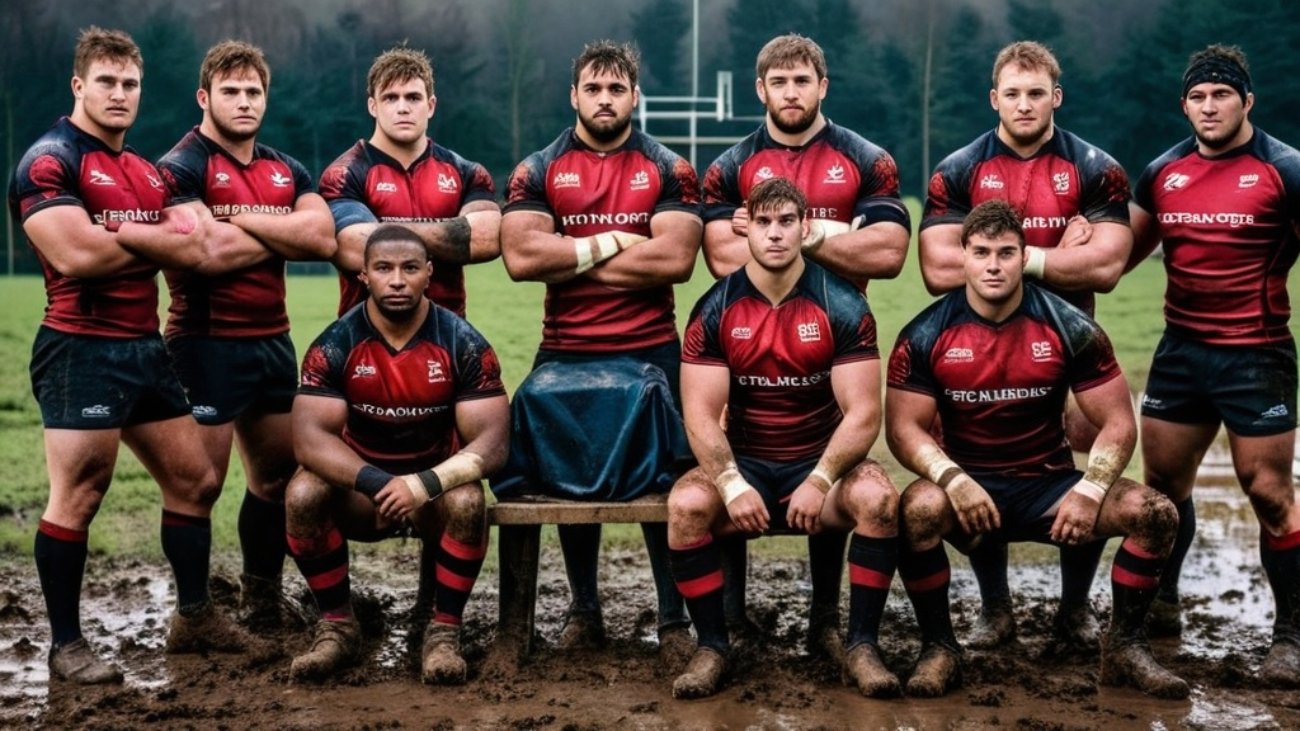
We understand that the visual representation of a sports team can be as much a part of their legacy as any trophy lifted or try scored. With our forthcoming publication, “Power and Pride: Rugby Team Portraits,” we aim to delve into the multifaceted world of rugby team photography. This collection, meticulously curated, offers more than just a gallery of faces; it is a historical archive, a study in team dynamics, and an exploration of the very essence of what it means to represent a club or country on the hallowed turf. We invite you, our reader, to journey with us through these visual narratives, to uncover the stories etched in the expressions and formations of these athletes.

The act of immortalizing a rugby team in a still image is a practice steeped in tradition, evolving alongside the sport itself. From the earliest days of team photography, where stiffly posed individuals stood as stoic representations of their collective might, to the dynamic, action-oriented captures of the modern era, each portrait serves as a timestamp, freezing a moment in time that speaks volumes about the team’s character and the era in which it was taken.

Early Formations and Formalities

In the nascent stages of rugby, team photography was a formal affair. The emphasis was on presenting a unified front, a solid block of players projecting an image of strength and discipline. We observe these early portraits as akin to formal family photographs, where each member occupies a designated space, contributing to an overall tableau of respectability and belonging. The attire, often formal wear or official club blazers, further underscored this sense of occasion and serious intent.

The Evolution of Expression

As rugby shed its more rigid, aristocratic origins and embraced a broader, more democratic appeal, so too did its team portraits. The stiffness gradually gave way to more natural stances, and a hint of the camaraderie and competitive spirit began to seep into the compositions. We see this shift as a thawing of formality, a gradual unveiling of the human element behind the jerseys. Smiles, though perhaps still restrained, began to appear, suggesting a shared experience and a mutual respect that transcended mere obligation.

Technological Advancements and Artistic Interpretation

The advent of new photographic technologies, from improved lighting techniques to greater film sensitivity, allowed for more ambitious and creative approaches to team photography. This opened the door for photographers to experiment with composition, framing, and even the environment in which the portrait was taken. We see these advancements as fertile ground for artistic interpretation, where the photographer becomes less of a documentarian and more of a visual storyteller.

For those interested in the artistry behind capturing the spirit of rugby teams, a fascinating related article can be found at All Star Legends. This piece delves into the significance of team portraits in showcasing the camaraderie and dedication of players, while also highlighting the unique styles and traditions that different teams embody. Whether you’re a fan of the sport or an aspiring photographer, this article offers valuable insights into the world of sports photography and its impact on team identity.

Beyond the Pose: Unpacking Team Dynamics

A rugby team portrait is rarely just about the individuals captured; it is an intricate tapestry woven with the threads of their collective relationships, their shared aspirations, and the unspoken hierarchy that often exists within a sporting unit. By observing the subtle cues – the positioning, the gestures, the glances – we can begin to decipher the underlying dynamics that fuel their on-field performance.

The Captain’s Anchor

The captain’s placement, often at the center, is a visual anchor, a focal point around which the rest of the team gravitates. This deliberate positioning is not merely symbolic; it reflects the captain’s responsibility, their role as the team’s leader and the embodiment of their collective will. We recognize this as a foundational element in understanding the team’s leadership structure, the captain being the lighthouse guiding the ship through turbulent seas.

The Inner Circle and the Extended Family

Subtle groupings within the larger team portrait can reveal the existence of an “inner circle” – perhaps seasoned veterans, key playmakers, or players with particularly strong bonds. Conversely, the spacing between players can indicate established friendships or developing alliances. We interpret these visual clusters as representing the organic social structures that form within a team, mirroring a family unit with its core members and extended relations.

The Shadow of the Bench

While the starting XV often forms the primary subject, the inclusion of substitutes, coaches, and support staff in broader team portraits offers a more holistic view. Their presence, though perhaps peripheral, acknowledges their integral role in the team’s success. We consider these wider inclusions as a testament to the fact that a rugby team is not a collection of individuals, but a unified ecosystem where every element plays a part.

The Uniform as a Canvas

The rugby jersey, far from being mere apparel, is a powerful symbol of identity, history, and allegiance. In team portraits, the uniform becomes a canvas upon which the team’s story is painted, each crest, each stripe, each detail carrying a weight of meaning.

Crests as Storytellers

The club crest, often prominently displayed, is more than a decoration; it is a condensed narrative of the team’s origins, its values, and its aspirations. Each element within the crest – a lion, a fleur-de-lis, a specific animal – carries historical or mythological significance, imbuing the wearer with a sense of lineage and purpose. We see these crests as heraldic devices, whispering tales of past glories and future ambitions.

Colors and Their Connotations

The distinctive colors of a rugby team are their visual signature, communicating their identity to the world. These colors are not chosen arbitrarily; they often carry historical or geographical associations, or perhaps even reflect a past sporting ideal. We analyze these color choices as deliberate statements, painting the team’s personality onto the visual spectrum.

The Scars and Stitches of Experience

While formal portraits aim for pristine presentation, certain candid or more informal images can reveal the tactile history of the game. Faded jerseys, worn patches, or even subtle traces of mud can speak to the intensity of training, the grit of matches, and the shared experiences that forge a team. We view these subtle imperfections as badges of honor, the visible scars that attest to their battles.

Context is King: The Setting of the Shot

The environment in which a rugby team is photographed significantly influences the message and meaning conveyed by the portrait. Whether on the hallowed ground of their home stadium or against a stark, neutral backdrop, the setting provides crucial context.

The Sacred Ground: Home Stadium Portraits

Portraits taken on their home pitch, often with the stands visible in the background, are imbued with a powerful sense of belonging and ownership. This is their territory, their sanctuary, and the backdrop emphasizes the connection between the players and their passionate fanbase. We consider these images as declarations of home turf advantage, a visual announcement of their domain.

The Battlefield: Training Grounds and Adversity

Images captured during intense training sessions or amidst challenging weather conditions offer a glimpse into the team’s resilience and dedication. These settings speak to the hard work, the sweat, and the unwavering commitment required to succeed. We find these portraits to be stark reminders of the unglamorous but essential labor that underpins on-field success, the forge in which their prowess is honed.

Neutral Territories: The Studio and the Statement

Studio portraits, with their controlled environments and often minimalist backdrops, allow the focus to remain squarely on the individuals and their collective presence. These settings can lend a sense of gravitas and timelessness to the images, presenting the team as a unified force stripped of external distractions. We view these as carefully composed statements of intent, where the essence of the team is distilled and presented without adornment.

Rugby team portraits capture the spirit and camaraderie of the players, showcasing their dedication and teamwork. For those interested in exploring more about sports photography, a related article discusses the nuances of capturing running events and the unique challenges they present. You can read more about it in this insightful piece on running event sports photography. This resource provides valuable tips for photographers looking to enhance their skills in dynamic sports settings.

The Enduring Legacy: Capturing a Moment in Time

Rugby team portraits, by their very nature, are intended to endure. They serve as a historical record, a tangible link to teams past, and an inspiration for those who will follow. “Power and Pride: Rugby Team Portraits” seeks to celebrate this enduring legacy, offering a window into the heart and soul of the sport.

Historical Archives and Collective Memory

These photographs function as vital components of a sport’s collective memory. They allow future generations to connect with their heritage, to understand the players who wore the same colors, and to appreciate the evolution of the game. We see these portraits as pages in the grand historical novel of rugby, each one a chapter worth revisiting.

The Inspiration of Heroes

For aspiring young players, team portraits of their heroes can be a potent source of inspiration. Seeing the faces of celebrated athletes, united in purpose, can ignite a desire to emulate their achievements and to become part of that esteemed lineage. We believe these images act as beacons, guiding and motivating the next wave of talent.

A Visual Encyclopedia of the Sport

The collection presented in “Power and Pride” will serve as a visual encyclopedia of rugby. It will document the changing fashions, the evolving team dynamics, and the enduring spirit of camaraderie that defines the sport. We intend for this work to be a comprehensive resource, a visual testament to the power and pride found within every rugby team.

Contact Us

FAQs

What is the purpose of rugby team portraits?

Rugby team portraits are taken to capture and showcase the members of a rugby team, often for promotional materials, yearbooks, or memorabilia. They help document the team’s composition during a particular season.

When is the best time to take rugby team portraits?

The best time to take rugby team portraits is usually before the start of the season or early in the season when the full team is available and in their official uniforms.

What should players wear for rugby team portraits?

Players typically wear their official team uniforms, including jerseys, shorts, and sometimes socks or other team gear, to ensure a cohesive and professional look in the portraits.

How are rugby team portraits typically arranged?

Rugby team portraits are often arranged with players standing or sitting in rows, usually with coaches or team staff included. The arrangement aims to clearly show each player’s face and uniform number.

Can rugby team portraits be used for promotional purposes?

Yes, rugby team portraits are commonly used for promotional purposes such as team websites, social media, programs, and marketing materials to represent the team and engage fans.

Photo Netball team portrait, athletes in action poses, clean studio backdrop

Capturing the Spirit: Football Team Photography

Our endeavor to document the essence of a football team through photography is multifaceted, demanding both technical proficiency and a nuanced understanding of the sport’s inherent theatricality. We endeavor to move beyond simple portraiture, striving to encapsulate the team’s collective identity, their individual narratives, and the dynamic energy that defines their pursuit of victory. This article will explore the methodologies we employ, the challenges we encounter, and the foundational principles that guide our photographic practice in this demanding field.

Before we even consider pressing the shutter, a significant amount of groundwork is laid. We see our role not just as photographers, but as visual historians, tasked with preserving a tangible record of a team’s journey.

Understanding the Team’s Ethos

Every football team possesses a unique character, a distinctive spirit forged by its history, its coaching philosophy, and the personalities of its players. We initiate our process by immersing ourselves in this ethos. This involves:

  • Pre-season Consultations: We engage directly with coaching staff and management to understand their vision for the season, their strategic objectives, and any specific themes they wish to emphasize. This collaborative approach ensures our photographic narratives align with the team’s overarching goals.
  • Historical Contextualization: We research the team’s past achievements, significant players, and any enduring rivalries. This background knowledge informs our shot selection and allows us to create images that resonate with the team’s legacy and fan base. For instance, knowing a particular match is a derby allows us to anticipate heightened emotions and positions ourselves accordingly.
  • Individual Player Spotlights: While emphasizing team cohesion, we also recognize the importance of individual narratives. We endeavor to learn about key players, their strengths, their personalities, and their roles within the team structure. This allows us to capture moments that highlight their contributions, whether it’s a veteran’s leadership or a rookie’s burgeoning talent.

Equipment as an Extension of Our Vision

The tools we utilize are carefully selected to meet the rigorous demands of sports photography. Our equipment is not merely an assembly of devices; it is an extension of our creative intent.

  • High-Speed DSLRs/Mirrorless Cameras: We rely on bodies capable of rapid continuous shooting rates and robust autofocus systems. These features are crucial for freezing fast-paced action and tracking subjects accurately across the field. We prioritize cameras with excellent low-light performance, acknowledging that many critical moments occur under less-than-ideal lighting conditions, especially during evening matches.
  • Telephoto Lenses for Reach: A diverse array of telephoto lenses is indispensable. Lenses ranging from 70-200mm to 400mm or even 600mm allow us to capture close-up action from various positions around the pitch. We often utilize prime lenses for their superior optical quality and wider apertures, enabling us to isolate subjects with a shallow depth of field, rendering the chaos of the background into a painterly blur.
  • Wide-Angle Lenses for Context: While telephotos dominate, wide-angle lenses play a pivotal role in establishing context. We use them for team group shots, capturing the vastness of the stadium, and documenting the atmosphere of the crowd. These lenses help us tell a broader story, showing the environment in which the sporting drama unfolds.
  • Monopods and Tripods for Stability: In sports photography, stability is paramount. Monopods are frequently employed for supporting long telephoto lenses, reducing camera shake and fatigue during extended shooting periods. Tripods are reserved for specific static shots, such as pre-match team line-ups or capturing large-scale stadium vistas.
  • Remote Triggers and Lighting: For specific scenarios, such as capturing locker room celebrations or controlled portrait sessions, we employ off-camera flash units triggered wirelessly. This allows us to manipulate light to create dramatic and artistic effects, sculpting the players with light and shadow.

For those interested in the art of capturing the spirit and energy of football teams, a related article can be found at All Star Legends Blog. This article delves into the techniques and tips for photographing football teams, highlighting how to effectively showcase their camaraderie and athleticism through compelling imagery. Whether you’re a professional photographer or an enthusiastic amateur, this resource offers valuable insights to enhance your football photography skills.

The Art of the Match Day Capture

Match day is where our preparation converges with the live event. It is a period of intense focus, anticipation, and rapid decision-making. We aim to capture not just the goals, but the entire emotional arc of the game.

Strategic Positioning and Anticipation

Our ability to predict and react to the unfolding drama is critical. We think in terms of narratives, not just isolated moments.

  • Understanding Game Flow: We have developed an intuitive understanding of football’s ebb and flow. This knowledge allows us to anticipate critical moments – set pieces, counter-attacks, defensive clearances – and position ourselves accordingly. We are constantly scanning the pitch, looking at player formations and body language for clues about impending action.
  • Field Coverage: We often deploy multiple photographers around the pitch to ensure comprehensive coverage. One photographer might focus on close-up action near the goals, another on midfield battles, and a third on sideline reactions and coaching staff. This multi-perspective approach allows us to weave a richer visual tapestry of the game.
  • Anticipating Emotional Peaks: Football is a crucible of emotions. We actively seek out moments of triumph, despair, frustration, and solidarity. These emotions are often most palpable after goals, near misses, or contentious decisions. We have learned to anticipate these reactions and position our cameras to capture the raw human element of the sport. The roar of the crowd after a goal, for instance, often precedes an immediate player reaction that we strive to capture.

Capturing the Narrative Arc

A single photograph, however compelling, is part of a larger story. We build a photographic narrative that reflects the game’s progression.

  • Pre-match Rituals: We document the quiet intensity of warm-ups, the team huddle, and the walkout onto the pitch. These moments establish the atmosphere and foreshadow the impending contest. The steely gaze of a player in the tunnel, the last-minute instructions from a coach, all contribute to the narrative.
  • Action Sequences: We prioritize capturing key phases of play – a powerful tackle, a header-scoring attempt, a goalkeeper’s acrobatic save. We often shoot in burst mode to create sequences that tell a concise story of an action, allowing the viewer to infer movement from a series of still images.
  • Post-match Reflections: The final whistle is not the end of our work. We capture the victors celebrating, the defeated commiserating, and the interactions between players, coaches, and fans. These moments often provide the most profound insights into the human aspect of the sport. We aim to capture the metaphorical sighs of relief and the visible weight of defeat.

Beyond the Pitch: The Team’s Broader Identity

Our photographic mandate extends beyond the 90 minutes of gameplay. We strive to capture the team’s identity in its most holistic form, documenting their life off the field as well.

Training Ground Dynamics

The training ground is the forge where skills are honed and team spirit is forged. We find these sessions to be immensely valuable for capturing the essence of the team.

  • Focused Practice: We document specific drills, showcasing the physical exertion and the meticulous repetition required for mastery. These images reveal the dedication and discipline that underpins performance. We aim to portray the unseen labor that translates into visible prowess on match day.
  • Interactions and Camaraderie: Training often provides opportunities to capture the informal interactions between players and coaching staff. These moments of laughter, encouragement, and shared struggle reveal the underlying camaraderie that is vital for team cohesion. We look for those small gestures, the pats on the back, the shared jokes, that speak volumes about their bond.
  • Individual Preparation: We also focus on individual players during training, capturing their personal routines, their commitment to fitness, and their specific technical development. These images provide a glimpse into the personalized journeys within the collective.

Portraiture and Brand Building

Individual and group portraits serve a distinct purpose in showcasing the team’s personality and contributing to their public image.

  • Formal Team Portraits: We meticulously plan and execute formal team portraits, ensuring professional lighting, composition, and presentation. These images are often used for official club publications, merchandise, and media kits, representing the team’s visual brand. We aim for a dignified and unified presentation.
  • Individual Player Portraits: Beyond the action shots, we undertake individual portrait sessions with players, often seeking to reveal their personality outside of the competitive arena. Whether it’s a studio shot or an on-location portrait, we aim to capture their unique character, their determination, or even a hidden vulnerability. These portraits act as visual biographies, offering a window into the individual behind the jersey.
  • Lifestyle Photography: Occasionally, we are commissioned to produce lifestyle imagery that depicts players in less formal settings, perhaps engaging with fans or participating in community events. These images humanize the athletes and contribute to a broader narrative of the club’s engagement with its supporters and the wider community.

Post-Production and Archival Responsibility

Our work is not complete once the final image is captured. The subsequent stages of editing, selection, and archiving are crucial for maximizing the impact and longevity of our photographic endeavors.

Curation and Editing for Impact

The sheer volume of images captured during a match or training session necessitates a rigorous selection process. We are sculptors of light, and the editing process is our final chiseling.

  • Ruthless Selection: We review thousands of images to identify the strongest, most impactful shots. We look for images that are technically sound, emotionally resonant, and contribute effectively to the overall story. The aim is to present a curated collection that represents the highlights and key narratives.
  • Color Correction and Grading: We apply consistent color correction and grading to all selected images, ensuring a cohesive visual aesthetic for the entire collection. This includes adjusting exposure, white balance, contrast, and saturation to enhance the visual appeal and impact of each photograph.
  • Cropping and Compositional Refinement: Minor cropping and compositional adjustments are often made to strengthen the visual hierarchy and remove distracting elements. We strive to present images that are balanced, dynamic, and draw the viewer’s eye to the central subject.

Archiving for Posterity

The images we create are not merely ephemeral; they are historical documents. Our archiving practices are designed to ensure their long-term preservation and accessibility.

  • Metadata Integration: Every image is meticulously tagged with descriptive metadata, including player names, event details, dates, locations, and relevant keywords. This metadata vastly improves searchability and allows for efficient retrieval of specific images in the future.
  • Secure Storage Solutions: We utilize robust and redundant storage solutions, including local network-attached storage (NAS) and cloud-based backups. This multi-layered approach safeguards against data loss due to hardware failure or other unforeseen circumstances.
  • Deliverables for Clients: We provide clients with high-resolution digital files, often in multiple formats (e.g., JPEG, TIFF), optimized for different uses (print, web). We also maintain a version control system to track any revisions or specific client requests.

In conclusion, our approach to football team photography is a synthesis of technical skill, artistic vision, and a deep respect for the sport and its participants. We are not merely taking pictures; we are crafting a visual legacy, one frame at a time, that encapsulates the triumphs, trials, and enduring spirit of the beautiful game. We invite you to consider the meticulous effort involved in bringing these narratives to life, recognizing that each image is a carefully constructed artifact intended to resonate with the team, its supporters, and the broader world of football.

Contact Us

FAQs

What equipment is typically used in football team photography?

Football team photography usually requires a DSLR or mirrorless camera with a fast lens, such as a 70-200mm f/2.8, to capture action shots. A tripod or monopod may be used for stability, and additional lighting equipment can be helpful for indoor or low-light conditions.

When is the best time to schedule a football team photo session?

The best time to schedule a football team photo session is typically before the season starts or early in the season. This allows for team photos to be used in programs, media guides, and promotional materials throughout the season.

What are common poses or setups in football team photography?

Common poses include the entire team lined up in rows, players in their uniforms holding helmets, and action shots on the field. Coaches and staff are often included, and individual player portraits are also common.

How can photographers ensure good lighting during outdoor football team photos?

Photographers should aim to shoot during the golden hours—early morning or late afternoon—when natural light is soft and flattering. Using reflectors or fill flash can help reduce harsh shadows, and positioning the team with the sun behind the photographer ensures even lighting.

What are some tips for managing a large football team during a photo shoot?

To manage a large team, photographers should plan the shoot in advance, communicate clearly with coaches and players, and organize the team into smaller groups if necessary. Using a checklist to ensure all players are present and ready can help the session run smoothly and efficiently.

Capturing the Essence: Individual Sports Portraits

We have long understood the profound capacity of photography to freeze moments in time, to distill transient narratives into persistent imagery. When we turn our lens to the world of individual sports, this capacity takes on a singular focus: the isolation and magnification of singular athletic prowess. Our exploration, “Capturing the Essence: Individual Sports Portraits,” delves into the methodologies, philosophies, and technical considerations that underpin this specialized photographic discipline. We aim to dissect how we, as photographers, can move beyond mere documentation to create portraits that resonate with the spirit, dedication, and unique story of each athlete.

At the heart of any compelling individual sports portrait lies the athlete themselves. We are not merely photographing a body in motion; we are aiming to capture the culmination of years of training, the embodiment of a particular discipline, and the raw emotion of competition or dedicated practice.

Understanding the Sport’s Demands

Before we even lift our cameras, our primary task is to immerse ourselves in the athlete’s world. This involves more than a superficial understanding of rules or scoring. We seek to grasp:

  • Physicality: What specific muscles are engaged during peak performance? Is it explosive power, sustained endurance, or delicate precision that defines their movement? For a weightlifter, we seek the bulging veins and strained sinews; for a gymnast, the elegant lines and symmetrical grace.
  • Mental Fortitude: What are the psychological pressures and triumphs inherent to their sport? Is it the solitary focus of a marathon runner, the strategic cunning of a fencer, or the unwavering nerve of a archer? We understand that the “game face” is often a window into a deeply honed mental state.
  • Equipment and Environment: How do their tools – the tennis racket, the climbing rope, the specialized bicycle – become extensions of their will? How does their training ground – the track, the pool, the open road – shape their identity and performance? These elements are not props; they are essential components of their narrative.

Collaboration and Trust

We find that the most impactful portraits emerge from a collaborative process. Athletes are often accustomed to being a blur of motion in a grander spectacle. Our approach requires them to slow down, to reveal themselves in a more introspective light.

  • Pre-Shoot Consultation: We initiate detailed conversations, not just about scheduling, but about their journey, their motivations, and what they envision as a true representation of their sport and themselves. We ask about their “why.”
  • Building Rapport: On location, we prioritize creating a comfortable and trusting environment. This might involve extended periods of observation, light conversation, or simply demonstrating our understanding of the challenges they face. We aim to be an ally, not an intrusive observer.
  • Direction and Interpretation: While we offer guidance on posing and expression, we are also highly attuned to spontaneous moments. We encourage authentic emotion and movement, often working to draw out the intensity or serenity that defines their discipline. We act as interpreters, translating their inner drive into visible form.

Individual sports portraits capture the essence and determination of athletes, showcasing their unique personalities and dedication to their respective sports. For those interested in exploring the world of sports photography further, a related article on running event photography can provide valuable insights and inspiration. You can read more about it in this informative piece: Running Event Sports Photography. This article delves into techniques and tips for capturing the dynamic energy of runners, making it a great resource for photographers looking to enhance their skills in individual sports portraits.

Technical Considerations: Our Tools and Their Application

Our craft relies heavily on a nuanced understanding of photographic technology. However, we view these tools not as ends in themselves, but as instruments that allow us to articulate our vision.

Lighting: Sculpting the Athlete

Lighting is perhaps our most potent creative lever. We employ it to highlight muscle definition, convey mood, and draw the viewer’s eye to specific details.

  • Natural Light: We often favor natural light for its organic quality and ability to evoke authenticity. We seek out times of day – the “golden hour” or an overcast sky – that offer soft, flattering illumination. However, we also exploit harsh sunlight to create dramatic shadows and emphasize strength or grit.
  • Artificial Light (Strobes/Constant): When natural light is insufficient or when we desire precise control, we turn to artificial sources. We understand the nuances of:
  • Key Light: The primary illuminator, shaping the subject and often positioned to create dramatic shadows that define musculature or facial features.
  • Fill Light: Used to soften harsh shadows created by the key light, reducing contrast and revealing detail in darker areas. We often apply it subtly to maintain a sense of dynamism.
  • Hair/Rim Light: Positioned behind and above the subject, it creates a luminous outline, separating them from the background and adding depth to the image. This can accentuate the lines of a gymnast or the sheen of sweat on a boxer.
  • Background Light: Used to illuminate the background independently, allowing for separation and mood setting.

Composition: Guiding the Eye

Our compositional choices are deliberate and designed to create visual harmony and emphasize the athlete’s presence within the frame.

  • Rule of Thirds and Leading Lines: We frequently employ these fundamental principles to create balanced yet dynamic compositions. A leading line, such as a track lane or a climbing rope, can draw the viewer directly to the athlete.
  • Negative Space: We consciously use negative space to isolate the athlete, allowing them to breathe within the frame and preventing visual clutter. This emphasizes their solitude and focus.
  • Angles and Perspective: We experiment with low-angle shots to convey power and dominance, or high-angle shots to suggest vulnerability or a broader context. A ground-level perspective can immerse the viewer directly into the athlete’s environment.
  • Framing: We utilize natural elements within the environment – a doorway, branches, or even parts of their equipment – to frame the athlete, adding depth and visual interest. This can provide a sense of looking through a window into their world.

Equipment Choices: Precision and Adaptability

Our choice of cameras, lenses, and accessories is dictated by the specific requirements of the shoot and the desired aesthetic.

  • Camera Bodies: High-resolution full-frame cameras are our preferred choice for their image quality and low-light performance. We also consider burst rates for capturing rapid sequences if motion is to be implied within a still frame.
  • Lenses:
  • Prime Lenses (50mm, 85mm, 135mm): We value primes for their sharpness, wide apertures (allowing for beautiful background blur), and consistent image quality. They encourage us to “zoom with our feet,” leading to more considered compositions.
  • Telephoto Zooms (70-200mm, 100-400mm): These are invaluable for capturing action from a distance, compressing perspective, and achieving a tight frame without being intrusive. They are particularly useful for athletes in expansive environments.
  • Wide-Angle Lenses (16-35mm, 24-70mm): Used to incorporate more of the environment, placing the athlete within their specific domain, and creating dramatic perspectives.
  • Modifiers: Softboxes, octaboxes, beauty dishes, and grids are essential for shaping and directing our artificial light sources, allowing us to mimic natural light qualities or create highly stylized effects. Reflectors also play a crucial role in bouncing light back onto the subject, filling shadows.

Beyond the Action: The Stillness of Dedication

While action photography captures the climax, individual sports portraits often seek the deeper meaning embedded in the preparation, the moments of reflection, and the quiet determination. We understand that the story doesn’t end with the finish line.

Portraits of Preparation

We believe that the journey is as significant as the destination. Thus, we often focus on the rituals and routines that precede performance.

  • Training Regimes: We seek to capture the repetitive, often grueling, nature of training. The sweat, the strain, the isolation of the gym or track – these elements speak volumes about commitment.
  • Moments of Concentration: The intense focus before a critical play, the quiet contemplation before a dive, or the stretching and mindfulness exercises – these are crucial for conveying mental fortitude. We aim to photograph the “thousand-yard stare” of an athlete envisioning their success.
  • The Tools of the Trade: We incorporate equipment not just as props but as symbols. A pair of worn boxing gloves tells a story of countless hours in the ring; a scuffed climbing shoe speaks of challenging ascents.

Portraits of Reflection

The aftermath of effort, whether in victory, defeat, or merely the conclusion of a demanding practice, offers a different kind of photographic opportunity.

  • Exhaustion and Elation: The physical toll and emotional release after performance provide deeply human elements. The gasping breath, the triumphant smile, or the defeated slump – these are windows into the athlete’s soul.
  • Connection to Environment: We capture the athlete interacting with their chosen arena after the main event. A swimmer gazing at the empty pool, a runner stretching on the quiet track – these images evoke a sense of belonging and dedication.
  • The Unseen Narrative: Sometimes, the most powerful portraits are those that hint at the story without explicitly telling it. A thoughtful gaze, a hand resting on a medal, or a head bowed in contemplation can convey a wealth of emotion and experience. We aim for images that spark curiosity and invite interpretation.

The Art of Post-Processing: Refining Our Vision

Our work does not conclude with the click of the shutter. Post-processing is an integral stage where we refine our initial vision and imbue our images with a distinct aesthetic. We approach it not as a corrective measure, but as a deliberate artistic choice.

Color and Tone Grading

We utilize color and tonal adjustments to set the mood and enhance the visual impact of our portraits.

  • Mood and Atmosphere: We might employ cool tones for a pensive, serious feel, or warm tones to convey energy and passion. Desaturated colors can evoke a timeless, classic aesthetic, while vibrant hues celebrate the dynamism of sport.
  • Contrast and Detail: We carefully adjust contrast to emphasize muscle definition, texture in equipment, and the play of light and shadow. We use local adjustments to selectively enhance details without over-processing the entire image.
  • Skin Tones: Maintaining natural and pleasing skin tones is paramount. We understand that accurate representation contributes to the authenticity and relatability of the portrait.

Retouching and Refinement

While we strive for authenticity, we also engage in thoughtful retouching to eliminate distractions and enhance the overall presentation of the athlete.

  • Distraction Removal: This includes subtle removal of stray hairs, minor blemishes, or distracting elements in the background that detract from the subject. Our goal is to clean up, not to alter the athlete’s natural appearance.
  • Sharpening and Noise Reduction: We apply controlled sharpening to enhance detail and definition where appropriate, particularly in the eyes and key features. Noise reduction is used judiciously to maintain image quality, especially in challenging low-light conditions.
  • Subtle Enhancements: We might make subtle adjustments to highlight catchlights in the eyes, subtly brighten certain areas, or gently sculpt light to further define features, always with the aim of drawing deeper meaning from the visual. We ensure these enhancements feel natural and organic, not artificial.

Individual sports portraits capture the essence of athletes, showcasing their determination and passion for their respective sports. These portraits not only highlight the physical attributes of the players but also convey their unique personalities and stories. For those interested in exploring the art of sports photography further, a related article on cricket portraits and photography can provide valuable insights into this captivating genre. You can read more about it here.

The Enduring Impact: A Legacy in Pixels

Ultimately, our collective endeavor in capturing individual sports portraits is about more than just photography; it is about storytelling. We strive to create images that serve as enduring testaments to human potential, resilience, and the relentless pursuit of excellence. Each portrait becomes a dialogue between the athlete’s spirit and our photographic vision, a frozen moment that echoes with the passion and dedication that defines their journey. We understand that these images become part of an athlete’s personal legacy, a visual reminder of their triumphs and the unwavering spirit that fueled their path. Through our meticulous care and artistic interpretation, we aim to ensure that this legacy is not just recorded, but profoundly felt. We invite viewers to look beyond the surface and to discern the narratives etched into every muscle, every expression, and every deliberate line of play.

Contact Us

FAQs

What are individual sports portraits?

Individual sports portraits are photographs or artistic representations that focus on a single athlete, capturing their personality, emotions, and physical form related to their sport.

What is the purpose of individual sports portraits?

The purpose is to highlight the athlete’s dedication, strength, and character, often used for personal branding, promotional materials, or as keepsakes.

What equipment is commonly used for individual sports portraits?

Photographers typically use high-quality cameras with fast lenses, lighting equipment, and sometimes sports gear or props to enhance the portrait.

How can athletes prepare for an individual sports portrait session?

Athletes should wear appropriate sports attire, ensure they are well-rested, and communicate with the photographer about the desired style and mood of the portraits.

What settings or locations are ideal for individual sports portraits?

Ideal settings include sports venues, gyms, outdoor fields, or studios with controlled lighting, depending on the sport and the desired aesthetic of the portrait.

Photo Rugby team portrait, strong poses, muddy boots, powerful athletic look

Capturing the Action: Team Sports Photography

We often witness team sports through the lens of statistics, strategies, and individual brilliance. Yet, beyond the scorecard and the cheers, lies a visual narrative waiting to be unfurled. This narrative is meticulously crafted by team sports photographers, individuals who are more than just observers – they are visual storytellers, tasked with freezing moments of intense athletic endeavor and translating them into lasting images. Our aim in this exploration is to delve into the multifaceted world of capturing the action in team sports photography, dissecting the technical skills, strategic approaches, and the often-overlooked dedication required to produce compelling visual records of our favorite games.

The creation of a powerful sports photograph is not a spontaneous eruption of luck. It is the result of a carefully orchestrated process, a dance between anticipation, technical proficiency, and an innate understanding of the game. For us, as photographers, this genesis begins long before the first whistle blows.

Understanding the Arena: The Stadium as Our Canvas

Every stadium, every field, every court presents a unique set of challenges and opportunities. We study its dimensions, its light sources (both natural and artificial), and the typical flow of the game from our chosen vantage points. This intimate knowledge allows us to anticipate where critical action is likely to unfold.

Mapping the Landscape: Identifying Prime Positions

We meticulously scout positions that offer unobstructed views of key areas. For a football match, this might mean access to the sidelines near goalmouths, but also elevated positions for wider field perspectives. In basketball, the baseline and the corners of the three-point arc are often crucial spots, while in baseball, the area behind home plate or along the first and third baselines offers distinct advantages. Our aim is to become intimately familiar with the stadium’s topography, understanding how each angle can shape the narrative.

Navigating the Light: A Constant Companion and Adversary

Light is the lifeblood of photography, and in sports, it is a fickle mistress. We must understand how the sun behaves in outdoor arenas or how artificial lights behave indoors. This involves knowing when the light will be at its most flattering or its most challenging, and adapting our approach accordingly.

Adapting to the Sun’s Arc: Morning vs. Afternoon Games

The positioning of the sun dramatically impacts lighting conditions. Morning games might offer softer, warmer light, while afternoon games can bring harsher shadows. We learn to work with these variations, using them to sculpt our images.

Mastering the Artificial Glow: Indoor Illumination Quirks

Indoor venues present their own set of lighting puzzles, often characterized by uneven distribution and specific color temperatures. We learn to compensate for these nuances to ensure accurate color rendition and prevent blown-out highlights or muddy shadows.

The Choreography of Anticipation: Predicting the Unpredictable

Sports are inherently unpredictable, a swirling vortex of human endeavor. However, successful sports photography hinges on a degree of informed prediction. We are not merely reacting to events; we are actively anticipating them.

Decoding the Game’s Rhythm: Understanding Tactics and Formations

Every sport has its own rhythm, its own ebb and flow. We study the tactics and formations employed by teams, learning to recognize the patterns of attack, defense, and transition. This understanding allows us to preposition ourselves for potential game-changing moments.

Reading Player Tendencies: The Psychology of Performance

Beyond formations, we learn individual player tendencies. Where does a particular striker usually find their space? Which defender is prone to making a crucial tackle? These insights are invaluable in placing ourselves for those fleeting moments of individual brilliance or critical defensive stands. It’s like understanding the heartbeat of the game, allowing us to be in sync with its tempo.

The Role of the Referee/Umpire: Unsung Elements of the Narrative

While our focus is on the athletes, the actions and reactions of officials often provide crucial context. A contentious penalty call, a controversial offside, these moments, though not directly athletic, are crucial to the unfolding drama. We learn to incorporate these elements into our visual storytelling when appropriate.

Team sports photography captures the dynamic energy and camaraderie of athletes in action, showcasing their skills and teamwork. For those interested in exploring a related aspect of sports photography, you might find the article on cheerleading sports portraits particularly insightful. It delves into the unique challenges and techniques involved in capturing the spirit and athleticism of cheerleaders. You can read more about it here: Cheerleading Sports Portraits.

The Technical Arsenal: Mastering the Tools of the Trade

Our equipment is an extension of our vision. The choices we make in terms of cameras, lenses, and accessories are crucial in translating the dynamism of sports into compelling imagery.

The Camera Body: Our Unwavering Partner

The camera body is the central nervous system of our operation. We prioritize bodies that offer robust build quality, high-speed continuous shooting capabilities, and excellent autofocus performance. These are the bedrock of our ability to freeze fast-moving action.

Sensor Size and Resolution: The Foundation of Image Quality

Larger sensors, such as full-frame, generally offer better low-light performance and a wider dynamic range, crucial for capturing detail in both bright highlights and deep shadows. Resolution, while important, is often secondary to these other factors for sports photography, where capturing the moment is paramount.

Autofocus Systems: The Eyes That Never Blink

A sophisticated autofocus system is non-negotiable. We rely on advanced tracking capabilities that can lock onto and follow moving subjects with precision, ensuring that our images are sharp even when the action is at its most frantic. This is akin to having a hawk’s eye, constantly tracking its prey.

Burst Mode Capabilities: Freezing the Fraction of a Second

The ability to shoot in burst mode, capturing multiple frames per second, is essential for ensuring we don’t miss the peak of an action. This allows us to select the absolute sharpest and most impactful frame from a sequence.

Lenses: Our Windows to the Action

The lens is our primary tool for framing the narrative, dictating our perspective and our proximity to the athletes. The selection of lenses is a strategic decision, influenced by the sport, the venue, and the desired aesthetic.

Telephoto Lenses: Bringing the Action Closer

For sports where we are positioned at a distance from the action, telephoto lenses are indispensable. They allow us to compress perspective, isolate subjects, and capture intimate details of player expressions and movements from across the field or court.

The 70-200mm: A Versatile Workhorse

This lens is a staple in many sports photographers’ bags, offering a versatile range that bridges the gap between mid-range and extreme telephoto. It’s our go-to for a multitude of shooting scenarios.

The 300mm and Beyond: For Distant Spectacles

For sports like track and field or equestrian events, where distance is a given, longer telephoto lenses become essential. They allow us to fill the frame with distant athletes, capturing their determination and effort.

Wide-Angle Lenses: Capturing the Grandeur and the Context

While telephoto lenses excel at isolation, wide-angle lenses are crucial for capturing the broader context of the game – the roar of the crowd, the expanse of the field, the sheer scale of the event. They can also be used for dramatic, close-up shots that convey a sense of urgency.

The Importance of Aperture: Allowing Light In

Fast apertures (low f-numbers like f/2.8 or f/1.8) are vital for sports photography, especially in low-light conditions. They allow us to use faster shutter speeds to freeze action and create a pleasing background blur (bokeh) that isolates the subject.

Accessories: The Supporting Cast

Beyond cameras and lenses, a range of accessories plays a vital role in our ability to perform effectively.

Tripods and Monopods: Providing Stability and Support

For longer lenses or for extended periods of shooting, tripods and monopods prevent camera shake and reduce fatigue, ensuring sharper images and allowing us to maintain our position for longer.

Extra Batteries and Memory Cards: The Fuel and the Memory

Sports events are long and often unpredictable. We must always be prepared for extended shooting sessions, ensuring we have ample power and storage for our images. Running out of either is a photographer’s worst nightmare.

Rain Gear and Protective Housings: Shielding Against the Elements

The elements can be a photographer’s nemesis. We invest in reliable rain gear and often protective housings to safeguard our precious equipment from moisture and dust, ensuring we can continue shooting regardless of the weather.

The Art of the Shot: Composition, Timing, and Storytelling

Beyond the technical, the true artistry of sports photography lies in how we frame the action, when we press the shutter, and how we imbue our images with a compelling narrative.

Compositional Dynamics: Guiding the Viewer’s Eye

Effective composition is not about following rigid rules; it’s about understanding how to arrange elements within the frame to create visual harmony and direct the viewer’s attention to the most important aspects of the image.

Leading Lines: Directing the Gaze

We utilize lines within the environment – the markings on the field, the angles of the stadium seats, the lines of players – to guide the viewer’s eye towards the subject of the photograph. This creates a sense of depth and movement.

Rule of Thirds and Beyond: Strategic Placement

While the rule of thirds is a fundamental compositional guideline, we also explore other techniques, placing subjects off-center to create visual tension or centering them for a powerful, direct impact. It’s about finding the sweet spot that resonates.

Negative Space: The Power of the Unseen

Negative space, the empty areas around our subject, is as important as the subject itself. It can enhance the sense of isolation, emphasize movement, or provide breathing room within a busy frame. It’s the silence that makes the music more potent.

The Pinnacle of Timing: The Decisive Moment

The concept of the “decisive moment,” popularized by Henri Cartier-Bresson, is perhaps even more pronounced in sports photography. Our goal is to capture the apex of the action, the peak of emotion, the moment of ultimate consequence.

The Release and the Follow-Through: Capturing the Full Arc of Motion

We aim to capture not just a single action, but the entire narrative of a movement. This means anticipating the release of a ball, the explosive leap, the last-ditch tackle, and often the immediate aftermath.

Emotion as the Invisible Force: The Human Element

Beyond the physical, sports are a theater of human emotion. We strive to capture the exultation of victory, the agony of defeat, the sheer concentration etched on a player’s face. These moments are often the most resonant and relatable. It’s about finding the soul in the sport.

Crafting the Narrative: Telling a Story in a Single Frame

Every photograph should tell a story. In team sports photography, this often means capturing the interplay between teammates, the struggle against an opponent, or the collective effort that defines a team.

The Gaze: A Window into Motivation

A player’s gaze can reveal volumes about their intentions, their focus, or their frustration. We are constantly looking for those meaningful eye contact moments, whether between teammates or with the game itself.

The Gesture: Expressing the Unspoken

A clenched fist of triumph, a supportive hand on a teammate’s back, a despairing gesture – these gestures are powerful visual cues that add depth and emotional resonance to our images. They are the silent language of the game.

The “Hero Shot”: Elevating Individual Effort

While teamwork is paramount, certain moments define individual brilliance. We seek to capture those defining shots that celebrate a player’s skill and dedication, often within the context of the team’s overall effort.

Post-Production: The Final Polish

The journey of a sports photograph doesn’t end when the shutter is released. Post-production is a critical stage where we refine our images, enhancing their impact and ensuring they meet professional standards.

Software Suite: Our Digital Darkroom

We utilize sophisticated editing software to adjust exposure, color balance, contrast, and sharpness. This is not about fabricating reality, but about optimizing the existing visual information to present the most compelling and accurate representation of the moment.

Color Correction and White Balance: Achieving True Representation

Ensuring accurate color rendition is crucial. We fine-tune white balance to eliminate color casts that can be introduced by different lighting conditions, ensuring that the colors of the uniforms and the field appear as they would naturally.

Sharpening and Noise Reduction: Enhancing Detail and Clarity

We selectively sharpen images to bring out fine details and use noise reduction techniques to minimize grain, especially in images shot in low light, without sacrificing image quality.

Cropping and Straightening: Refinements for Impact

Cropping allows us to refine the composition, eliminating distractions and strengthening the focus on the subject. Straightening horizons or correcting perspective can also significantly improve the visual appeal of an image.

Exporting and Delivery: Preparing for Publication

The final step involves exporting our images in the appropriate formats and resolutions for their intended use, whether for online publication, print media, or client delivery. This ensures optimal quality and compatibility across different platforms.

Team sports photography captures the dynamic energy and camaraderie of athletes in action, showcasing their skills and teamwork. For those interested in exploring a different aspect of sports photography, a related article on running events can provide valuable insights into capturing the essence of individual and group performances. You can read more about this fascinating topic in the article on running event sports photography, which highlights techniques and tips for photographing athletes in motion.

The Ethical Compass: Responsibility and Integrity

As visual chroniclers of sport, we operate with a strong sense of ethical responsibility. Our aim is to represent the game and its participants accurately and respectfully.

Inclusivity and Representation: Reflecting the Diversity of Sport

We strive to capture the full spectrum of participants, ensuring that our imagery reflects the diversity of gender, race, and ability within sport. Every story deserves to be seen.

Respect for Athletes and Privacy: The Boundaries of Our Lens

While we capture intense moments, we are mindful of the athletes’ privacy and dignity. We avoid gratuitous or exploitative imagery and always prioritize capturing the spirit of competition and camaraderie.

Accuracy and Authenticity: The Core of Our Practice

Our commitment is to authenticity. We present the action as it happened, avoiding manipulation that misrepresents the events or the emotions of those involved. Our photographs are intended to inform and to inspire, not to deceive.

In conclusion, capturing the action in team sports photography is a demanding yet immensely rewarding pursuit. It requires a blend of technical prowess, strategic thinking, artistic vision, and an unwavering passion for the game. We are the custodians of these fleeting moments, translating the raw energy and human drama of sport into images that resonate long after the final whistle has blown. Our lens is not just a tool; it is a conduit through which the enduring spirit of athleticism is brought to life for all to see and cherish.

Contact Us

FAQs

What equipment is essential for team sports photography?

Essential equipment for team sports photography includes a DSLR or mirrorless camera with a fast autofocus system, telephoto lenses (typically 70-200mm or longer), a high-speed memory card, and sometimes a monopod for stability. A camera with a high frame rate is also beneficial to capture fast action.

What settings are recommended for capturing fast-moving sports action?

To capture fast-moving sports action, use a fast shutter speed (usually 1/1000 second or faster) to freeze motion, a wide aperture to allow more light and create a shallow depth of field, and a high ISO setting if necessary to maintain proper exposure. Continuous autofocus and burst mode are also recommended.

How can photographers effectively capture the emotions and dynamics of team sports?

Photographers can capture emotions and dynamics by anticipating key moments such as celebrations, intense plays, and interactions between players. Positioning oneself at strategic locations like the sidelines or near the goal can help capture compelling expressions and action. Using a telephoto lens allows close-up shots without disturbing the game.

What are some common challenges in team sports photography?

Common challenges include fast and unpredictable movement, varying lighting conditions (especially in outdoor or indoor venues), obstructed views due to players or equipment, and the need to quickly adjust camera settings. Managing background distractions and ensuring player safety while shooting are also important considerations.

Is post-processing important in team sports photography?

Yes, post-processing is important to enhance image quality, adjust exposure, crop for better composition, and remove distractions. However, it is generally best to keep edits natural to preserve the authenticity of the moment. Many photographers also use post-processing to convert images to black and white or to emphasize certain colors for artistic effect.

Photo Football team portrait, players in full kit, dramatic studio lighting, club branding

Capturing the Athlete’s Essence: Sports Portrait Photographer

We are the custodians of fleeting moments, the visualchroniclers of triumphs and tribulations. In the realm of sports photography, our canvas is the arena, our subjects are athletes, and our art lies in capturing the essence of their physical and emotional journey. We are sports portrait photographers. Our work transcends mere documentation; we aim to encapsulate the spirit, the dedication, the raw power, and the nuanced vulnerability that define an athlete’s existence.

Before we even lift a lens, our process begins with an in-depth understanding of our subject. We don’t just see a body in motion; we see a story unfolding. This narrative is built on countless hours of training, the sting of defeat, the exhilaration of victory, and the unwavering pursuit of excellence. We delve into their background, their sport’s culture, and the specific challenges they face.

Research as the Foundation

Our research is not a superficial glance at statistics. It’s a deep dive into the heart of their discipline. For a marathon runner, we study the grueling endurance required, the mental fortitude to push through pain barriers. For a gymnast, we analyze the precision, the grace, and the explosive power. We seek to understand not just what they do, but why they do it, and what drives them to continue. This knowledge is the bedrock upon which we build our photographic vision.

The Athlete’s Psyche: A Realm of Exploration

Understanding the athlete’s psyche is paramount. We look beyond the outward display of athleticism to explore the internal landscape. What are their motivations? What are their fears? What are the sacrifices they make? This psychological dimension informs our approach to lighting, composition, and the very moment we choose to freeze. We aim to capture the flicker of determination in their eyes, the subtle tension in their muscles before a pivotal move, or the quiet reflection after a hard-fought contest.

The Sport’s Unwritten Rules and Rituals

Every sport has its own unique language, its own unwritten rules and rituals. We immerse ourselves in this environment, observing the pre-game routines, the team camaraderie, the coach-athlete interactions, and the post-game analyses. These observations provide invaluable insights into the athlete’s world, allowing us to create portraits that resonate authentically with their experience. We become fluent in the gestures, the expressions, and the unspoken communication that defines athletic competition.

For those interested in enhancing their skills in sports portrait photography, a great resource is the article on photography classes available at All Star Legends. This article provides insights into various workshops and courses that can help photographers refine their techniques and capture the dynamic energy of athletes. To learn more about these opportunities, you can visit the article here: Photography Classes at All Star Legends.

Crafting the Visual Language: The Technical Toolkit

Our technical proficiency is the conduit through which we translate our understanding into compelling visuals. The equipment we wield is not merely a tool; it’s an extension of our artistic intent. Each lens, each setting, each lighting modifier plays a deliberate role in shaping the narrative.

Light: The Sculptor of Form and Emotion

Light is our primary medium for sculpting form and evoking emotion. We understand its behavior, its direction, and its quality. Whether it’s the harsh, dramatic glare of stadium lights, the soft, diffused glow of a studio, or the natural light of an outdoor training session, we manipulate it to highlight musculature, accentuate expressions, and create a compelling mood.

Natural Light: Harnessing the Elements

We often find ourselves drawn to natural light, which possesses a unique quality that can imbue portraits with authenticity and depth. The golden hour, just after sunrise or before sunset, offers a warm, flattering light that can enhance skin tones and create a sense of drama. Overcast days provide a soft, diffused light that minimizes harsh shadows and is ideal for capturing subtle expressions. We learn to read the sky, to anticipate the sun’s movement, and to use the environment to our advantage.

Artificial Light: Precision and Control

In controlled environments, artificial light allows for a greater degree of precision and creative control. We can shape light using strobes, continuous lights, and a range of modifiers like softboxes and grids. These tools enable us to create specific moods, isolate subjects, and emphasize particular details. For instance, a hard-edged light can accentuate the power and athleticism of a weightlifter, while a softer, more diffused light might be used to convey the grace of a dancer.

Composition: Guiding the Viewer’s Eye

Composition is our architectural blueprint, the way we arrange elements within the frame to guide the viewer’s eye and reinforce the narrative. We employ principles of the rule of thirds, leading lines, and negative space to create visually engaging and impactful portraits.

The Power of Negative Space

Negative space, the empty areas around the subject, is often as important as the subject itself. It allows the athlete to breathe within the frame, to command attention without being overwhelmed by clutter. It can also be used to convey a sense of isolation, contemplation, or vastness, depending on the intended narrative.

Leading Lines: Directing Focus

Leading lines – be they the lines of a track, the ropes of a boxing ring, or the gesture of an athlete’s limb – can effectively draw the viewer’s eye towards the subject and the focal point of the image. We consciously incorporate these elements to create a sense of depth and direct the viewer’s gaze with purpose.

Lens Selection: The Art of Perspective

Our choice of lens significantly impacts the perspective and intimacy of our portraits. A wide-angle lens can create a sense of grandeur and proximity, while a telephoto lens can compress the background and isolate the subject, emphasizing their isolation or singular focus.

Prime Lenses: Clarity and Sharpness

We often favor prime lenses for their superior sharpness and clarity. Their fixed focal length forces us to move our feet, to engage with our subjects more actively, and to consider our position with greater intent. This physical engagement often translates into a more intimate and dynamic portrait.

Zoom Lenses: Versatility and Adaptability

While primes offer unparalleled quality, versatile zoom lenses allow us to adapt quickly to changing situations, crucial in the fast-paced world of sports. A mid-range zoom can provide a balance between capturing the athlete and their environment, while a longer zoom allows us to capture candid moments from a discreet distance.

Beyond the Action: Capturing the Unseen Moments

While the adrenaline-fueled action shots are undeniably captivating, we believe the true essence of an athlete often resides in the moments between the action. These are the quiet beats, the unguarded expressions, and the subtle intimacies that reveal the human behind the competitor.

Pre-Game Rituals: The Calm Before the Storm

The hours leading up to a competition are often filled with a unique blend of anticipation and focused preparation. We seek to document the athlete’s pre-game rituals, the quiet contemplation, the focused stretching, the last-minute adjustments to equipment. These are moments of intense internal focus, where the athlete prepares not only their body but also their mind for the challenge ahead.

Post-Game Reflections: The Aftermath of Effort

The moments immediately following a competition are equally, if not more, revealing. The exultation of victory, the sting of defeat, the exhaustion etched on their faces, the shared camaraderie with teammates – these are raw, unvarnished emotions that offer profound insight. We aim to capture the athlete in their moment of processing, be it a triumphant embrace or a quiet sigh of relief.

The Training Ground: The Crucible of Dedication

The training ground is where the foundation of athletic prowess is built. Long, arduous hours of practice, the sweat, the blisters, the breakthroughs, and the setbacks – these are the building blocks of success. Our portraits from training sessions often depict raw determination, a relentless pursuit of improvement, and the sheer discipline required to excel.

The Athlete as an Archetype: Universal Themes in Sports Portraits

Through our work, we often find that individual athletes embody universal themes that resonate with audiences beyond the realm of sports. We see the embodiment of resilience, the unwavering pursuit of a dream, the courage to face adversity, and the dedication to a craft.

Resilience: The Unbroken Spirit

The ability to bounce back from setbacks is a defining characteristic of any great athlete. Our portraits can capture this resilience, showing the athlete recovering from injury, learning from defeat, and returning to their sport with renewed determination. We seek to portray the inner strength that allows them to persevere against all odds.

Dedication: The Unseen Sacrifice

The life of an athlete is often one of immense sacrifice. We aim to portray this dedication, not just in the physical exertion, but in the quiet moments of discipline, the missed social events, and the relentless self-improvement. The portraits become a testament to the unseen efforts that underpin athletic achievement.

Vulnerability: The Human Element

While sports often emphasize strength and invincibility, we also seek to capture the athlete’s vulnerability. This can be expressed through a moment of doubt, the pain of an injury, or the quiet introspection after a loss. These moments humanize the athlete, making them more relatable and their journey more profound.

If you’re interested in the captivating world of sports portrait photography, you might find this article on the artistry behind capturing athletes in their element particularly insightful. It explores various techniques and styles that can elevate sports portraits, showcasing how the right lighting and composition can tell a powerful story. For a deeper dive into stunning examples of this genre, check out the gallery of sports portraits at All Star Legends, where you can see how these elements come together to create striking images.

Collaboration and Connection: Building Trust with the Subject

Our success as portrait photographers hinges on our ability to build trust and rapport with our subjects. Athletes, often under intense scrutiny, can be wary of the camera. Our approach emphasizes collaboration and a genuine human connection.

The Importance of Communication

Open and honest communication is vital. We explain our intentions, our creative process, and what we aim to capture. We listen to their concerns and preferences. This dialogue ensures that they feel comfortable and involved in the photographic process, fostering a sense of partnership rather than intrusion.

Creating a Comfortable Environment

We strive to create a relaxed and comfortable atmosphere, whether we are on the field, in the studio, or during a casual interview. By being approachable and non-intrusive, we allow athletes to be themselves, to let down their guard, and to reveal their true character. We are not just documenting them; we are engaging with them.

Respecting Boundaries

We understand and respect the boundaries of our subjects. Athletes have demanding schedules and intense emotional states. We are mindful of their time, their energy levels, and their privacy, ensuring our presence enhances, rather than detracts from, their experience.

In essence, we are more than just photographers. We are storytellers, psychologists, and visual historians. We strive to create portraits that not only showcase the physical prowess of an athlete but also illuminate the unwavering spirit, the profound dedication, and the compelling humanity that drives them to push the boundaries of what is possible. We are the ones who capture the athlete’s essence, freezing moments of dedication, struggle, and triumph, preserving them for posterity, and offering the world a glimpse into the extraordinary lives they lead.

Contact Us

FAQs

What is a sports portrait photographer?

A sports portrait photographer specializes in capturing images of athletes, often highlighting their personality, strength, and dedication through posed or candid portraits.

What equipment is commonly used by sports portrait photographers?

They typically use high-quality DSLR or mirrorless cameras, fast lenses with wide apertures, and sometimes lighting equipment like strobes or reflectors to enhance the subject’s features.

How does a sports portrait photographer prepare for a shoot?

Preparation includes researching the athlete, choosing appropriate locations, planning poses, and coordinating with the subject to ensure comfort and authenticity during the session.

What skills are important for a sports portrait photographer?

Key skills include technical photography knowledge, understanding of sports culture, strong communication, creativity, and the ability to capture emotion and movement effectively.

Where are sports portrait photographs typically used?

These portraits are often used in promotional materials, athlete portfolios, sports magazines, websites, social media, and sometimes for personal keepsakes or sponsorship presentations.